
Choosing a Cop Winding Machine in 2026 requires more than comparing speed, price, and spindle counts. The decision affects yarn quality, labor efficiency, energy use, and downstream production stability. A machine may run quickly yet create uneven tension, soft edges, or damaged packages. Small defects become expensive during knitting and weaving.
Market signals also deserve attention. Textile Exchange’s 2024 Materials Market Report estimated polyester at approximately 57% of global fiber production in 2023. That figure matters because recycled and virgin fibers can behave differently during winding. Their friction, moisture response, and hairiness may require different tension settings. The International Textile Machinery Federation’s 2024 machinery shipment statistics also showed continuing changes in global equipment investment. Buyers should examine service availability, automation, and upgrade paths, not only delivery dates.
Dr. Seshadri Ramkumar, a textile materials expert, has emphasized: “Process performance must be measured at the machine, not assumed from the brochure.” This principle is practical. Request production trials using your actual yarn count, fiber blend, and target package density. Inspect the cop surface under clear lighting. Check splice strength, tension variation, noise, and power consumption during a full shift.
There is no perfect machine.
A spreadsheet can still mislead.
The best choice balances measurable output with operator experience. It also leaves room for honest uncertainty, because yarn behavior changes with humidity, raw-material lots, and maintenance quality. This guide explains how to compare Cop Winding Machine specifications, verify supplier claims, and select equipment that remains reliable beyond the first production month.
How to Choose a Cop Winding Machine in 2026?
What Is a Cop Winding Machine?
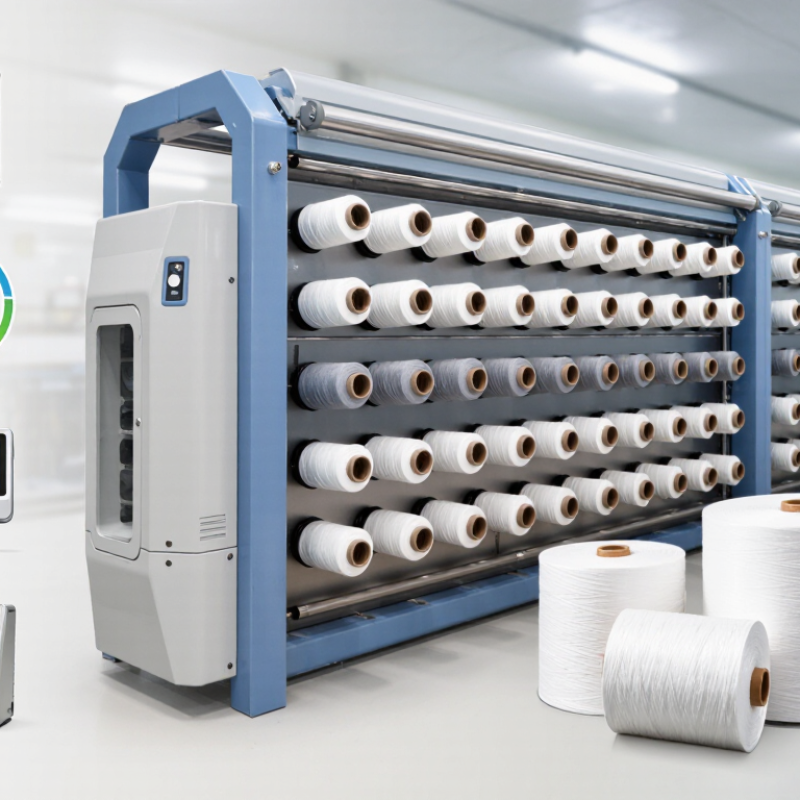
A cop winding machine transfers yarn from spinning cops onto larger, usable packages. A cop is a small yarn package produced by a spinning frame. During winding, the machine controls yarn tension, package shape, and winding speed. It may also detect thick places, thin places, slubs, or broken yarn. When a defect appears, the system can stop, cut, and reconnect the yarn through an automatic splicer.
In practical production, package quality matters as much as speed. A well-formed package unwinds smoothly on knitting, weaving, or dyeing equipment. Poor tension can create hard edges, loose layers, or frequent yarn breaks. When choosing a machine in 2026, check its cop size range, spindle capacity, tension control, sensor accuracy, and compatibility with your yarn types. Digital monitoring can help operators compare stoppage data and identify repeated problems. However, automation does not remove the need for careful setup.
Tips: Ask for a sample winding test using your actual yarn. Measure package hardness, yarn breaks, splice appearance, and production noise. Also inspect access to cleaning points and maintenance areas. I once underestimated cleaning time; lint quickly affected sensor readings. That mistake changed my evaluation checklist. Energy use deserves attention too, but advertised figures may depend on speed, yarn count, and factory conditions. Request test records, maintenance guidance, and operator training details before making a decision. Small details often decide whether a machine performs reliably every shift.
It transfers yarn from small spinning cops onto larger packages. The machine controls tension, speed, and package shape. These packages should unwind smoothly during knitting, weaving, or dyeing.
Poor tension can create hard edges, loose layers, and frequent yarn breaks. A well-formed package supports steadier downstream production. Speed alone is not enough.
Check cop size range, spindle capacity, winding speed, and tension control. Review sensor accuracy and compatibility with your yarn types. Also examine energy use under real factory conditions.
Automatic yarn loading and doffing can reduce handling time. Recipe storage helps reproduce settings across shifts. Manual override controls still matter when automation behaves poorly.
Sensors may identify thick places, thin places, slubs, broken yarn, and uneven tension. An automatic splicer can reconnect broken yarn. Camera inspection may detect surface defects, but lighting affects accuracy.
Track winding speed, stoppage causes, tension variation, and defect rates. Digital records can connect yarn lots with settings and inspection results. Incorrect recipes can create misleading data.
Request a winding trial with your actual yarn. Measure package hardness, yarn breaks, splice appearance, and edge consistency. Run the test long enough to reveal heat, vibration, dust, and noise. Short demonstrations can mislead.
Inspect access to sensors, tension devices, spindles, and cleaning points. Ask for daily and monthly maintenance schedules. Confirm spare-parts availability, technician response times, training, and warranty limits. Put service promises in the contract.
Choosing a Cop Winding Machine in 2026 requires a clear understanding of your production goals, yarn types, and quality requirements. Start by identifying whether the machine can handle the materials, yarn counts, package sizes, and winding tensions used in your operation. Compare its capacity, winding speed, spindle configuration, and flexibility to ensure it can meet current demand while allowing room for future growth. A suitable machine should provide consistent package formation without sacrificing yarn quality or production stability.
Automation and quality-control functions are also important factors. Features such as automatic doffing, tension monitoring, yarn fault detection, data recording, and easy parameter adjustment can improve efficiency and reduce waste. Beyond the purchase price, evaluate energy use, maintenance requirements, spare-parts availability, operator training, warranty coverage, and technical support. The best Cop Winding Machine is not simply the fastest or least expensive option, but the one that delivers reliable performance, manageable operating costs, strong quality control, and dependable long-term support.
