
How to Choose the Best Toroidal Core Winding Machine?

Time:2026-09-11 Author:Mason
0%

Choosing the right Toroidal Core Winding Machine has become a strategic manufacturing decision, not merely an equipment purchase. Demand for transformers and inductive components is rising with grid expansion, renewable energy, electric vehicles, and industrial automation. The International Energy Agency reported in Electricity Grids and Secure Energy Transitions (2023) that annual grid investment must exceed USD 600 billion by 2030 to meet global energy goals. That pressure reaches the factory floor.

Production quality matters.

A suitable machine should match core diameter, wire range, winding speed, insulation requirements, and expected production volume. It should also control tension consistently. A loose turn can create noise, uneven magnetic performance, or rejected assemblies. The U.S. Department of Energy’s Advanced Manufacturing Office has repeatedly emphasized process control, energy efficiency, and equipment reliability as important factors in modern manufacturing. These principles apply directly to toroidal winding operations.

Still, published market forecasts rarely compare machines under identical conditions. That is a limitation worth acknowledging. A high-speed specification may look impressive, yet it can hide setup time, wire breakage, tooling costs, or difficult maintenance. In practical evaluations, engineers should inspect sample winding quality, test repeatability, review service response times, and calculate total ownership cost. Operators should also examine the control interface closely. Small details matter, such as clear alarm messages and quick access to the tension system. The best Toroidal Core Winding Machine is not always the fastest model. It is the one that delivers stable, traceable, and economical results across the company’s real production requirements.
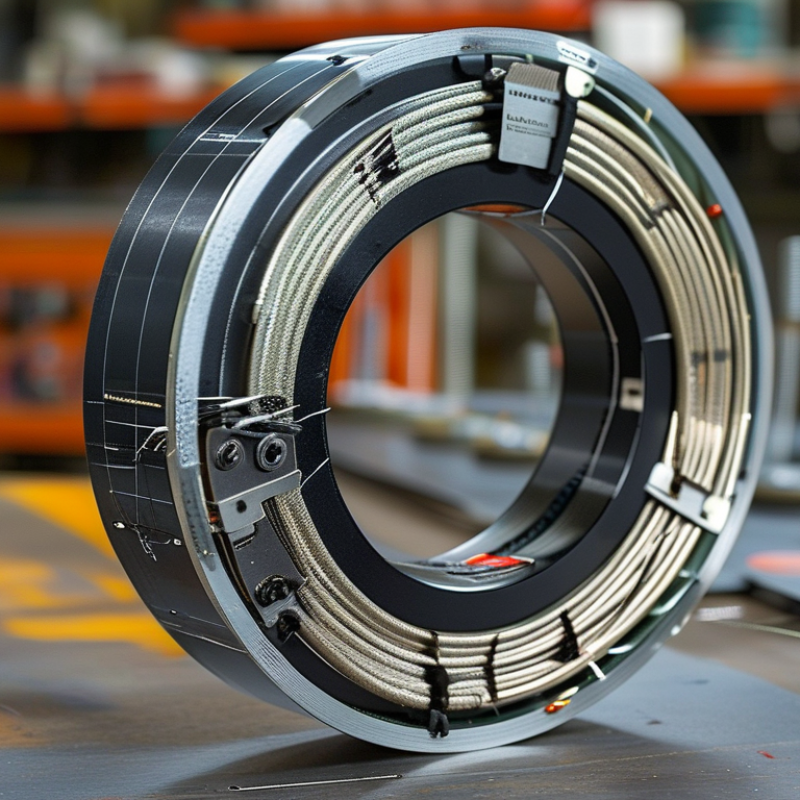
How to Choose the Best Toroidal Core Winding Machine?

Define Core, Wire, and Turn Requirements: OD 10–300 mm, Wire 0.05–3 mm

Choosing a toroidal core winding machine starts with three measurable variables: core diameter, wire diameter, and turn count. For this range, the core OD may span 10–300 mm, while wire size can vary from 0.05–3 mm. That is a demanding range. A machine designed for small signal cores may struggle with a 300 mm power core. Likewise, a thick wire needs stronger tension control and a larger wire guide.

10–300 mm
Core OD range
0.05–3 mm
Wire size range

Wire selection changes machine behavior sharply. A 3 mm wire has 3,600 times the cross-sectional area of a 0.05 mm wire. Therefore, confirm the feeder, tension sensor, guide clearance, and cutting method before comparing speed. IEC 60317-0-1 provides useful reference requirements for enamelled round copper wires. Industry forecasts also show continued transformer and electrical equipment growth; MarketsandMarkets’ 2024 transformer market report links this demand with wider production automation. The report is useful, but it should not replace a winding trial.

Tips: Request a test using your actual core and wire. Check turn-count accuracy, wire damage, layer alignment, and tension stability. A practical starting range is 50–300 turns per minute, but this depends on core geometry and insulation. Do not trust maximum speed alone. I have seen specifications look impressive while small wire slipped during acceleration. Measure the finished coil, then adjust tension and traverse settings. A machine with broad capacity may still perform poorly at the smallest wire size.

Match Machine Geometry to Core Sizes: ID/OD Ratios and 360° Winding Access

Choosing the best toroidal core winding machine starts with core geometry, not advertised speed. Measure the inner diameter, outer diameter, core height, and cross-sectional thickness. Then compare the ID/OD ratio with the machine’s working envelope. A narrow inner diameter can restrict the winding arm, shuttle, or needle path. A large outer diameter may exceed the turntable clearance.

Measure twice.

In practical machine trials, 360° winding access is equally important. The tool should travel smoothly around the full core without forced repositioning. This supports consistent wire placement and reduces tension changes between winding sections. Check the entry angle, wire guide clearance, and space for insulation sleeves. A machine may accept the core physically but still produce uneven layers if the access path is awkward.

Small errors compound. Core dimensions can vary slightly between batches, especially after coating or finishing. Test representative samples rather than relying only on drawings. Watch for wire rubbing, sudden tension peaks, and gaps near the inner diameter. These details reveal whether the geometry truly matches production needs. A smaller core may require slower acceleration, while a thicker core may need a wider winding path. The ideal specification is sometimes less obvious than expected. Review the first test carefully, because a clean-looking winding pattern can still hide poor tension control.

How to Choose the Best Toroidal Core Winding Machine? - Match Machine Geometry to Core Sizes: ID/OD Ratios and 360° Winding Access

Core Geometry / Machine Requirement Typical Design Range Recommended Winding Access Suitable Machine Geometry Selection Guidance
Small toroidal cores OD: 10–40 mm
ID: 4–25 mm
Core height: 3–15 mm
360° continuous access with a compact shuttle Small shuttle ring, narrow guide path, fine wire tension control Prioritize low inertia, accurate wire guiding, and a small shuttle-to-core clearance. The machine should accommodate the minimum core ID without restricting shuttle rotation.
Medium toroidal cores OD: 40–100 mm
ID: 20–65 mm
Core height: 8–35 mm
Full 360° access with adjustable shuttle and guide arm Standard shuttle winding system with programmable traverse This range generally benefits from a machine with adjustable core fixtures, closed-loop tension control, and programmable winding speed for consistent layer placement.
Large toroidal cores OD: 100–250 mm
ID: 50–170 mm
Core height: 20–80 mm
360° access with a large shuttle, wide throat, and rigid support Heavy-duty shuttle or segmented shuttle system Check shuttle capacity, spindle torque, fixture stiffness, and operator loading space. A rigid frame helps prevent positional variation during high-fill winding.
Low ID/OD ratio ID/OD: below 0.35 High-clearance 360° path; reduced shuttle thickness may be required Compact shuttle with a narrow cross-section and offset guide system A small inner opening limits shuttle clearance and wire entry angle. Verify the minimum usable ID after accounting for insulation, bobbins, clamps, and safety clearance.
Moderate ID/OD ratio ID/OD: 0.35–0.60 Conventional 360° shuttle access General-purpose toroidal winding geometry This is a practical range for many standard toroidal winding applications. Match the machine throat and shuttle diameter to the complete core-and-fixture envelope.
High ID/OD ratio ID/OD: above 0.60 360° access is usually less restricted Standard or high-speed shuttle geometry The larger opening provides more shuttle clearance, but the machine must still control wire angle, traverse position, and tension across the full outer circumference.
Thick rectangular or square-section cores Radial thickness: 10–60 mm
Height: 10–80 mm
360° access with adjustable guide height and lateral alignment Wide-clearance shuttle with programmable wire traverse The guide system should accommodate the larger radial build while maintaining a controlled wire path. Confirm maximum wire bundle height and fixture clearance.
High-fill winding Typically above 70% of available winding window Continuous 360° access with precise tension and layer control Servo-controlled shuttle, tensioner, and traverse axis Select a machine that supports programmable speed profiles, controlled acceleration, wire break detection, and repeatable indexing to reduce gaps and crossovers.
Multi-wire or bifilar winding Two or more wires wound simultaneously Uninterrupted 360° access with independent wire paths Multi-channel tensioning and synchronized shuttle motion Verify that each wire channel has independent tension adjustment and that the guide system prevents wire rubbing, twisting, or unequal feed length.
Wide product-size range Multiple core sizes with different ID, OD, and height values Adjustable 360° access throughout the specified size range Modular fixtures, adjustable guides, and interchangeable shuttles Base the selection on the smallest ID and largest OD simultaneously. Do not evaluate machine capacity using only the average core dimensions.
Key sizing formula: ID/OD ratio = Core inside diameter (ID) ÷ Core outside diameter (OD). For final machine selection, verify the complete operating envelope, including core height, wire diameter, insulation thickness, shuttle dimensions, fixture clearance, winding speed, and required 360° access.

Evaluate Productivity: Winding Speeds up to 1,200 RPM and Turns per Minute

When choosing a toroidal core winding machine, treat 1,200 RPM as a ceiling, not a guaranteed production rate. A machine’s useful output depends on turns per minute, wire diameter, core size, tension control, and acceleration time. A compact core may accept high speed, while a larger core can require slower, steadier rotation.

Measure good turns per minute during a real trial. Record setup time, stoppages, rejected coils, and operator adjustments. For example, 900 productive turns per minute with 95% uptime may outperform 1,200 RPM with frequent pauses. The U.S. Department of Energy’s 2022 Motor Systems Market Assessment reports that motor-driven systems consume about 68% of industrial electricity in the United States. This supports evaluating drive efficiency, heat generation, and standby consumption, not speed alone.

Ask suppliers for production records using your wire and core dimensions. Request continuous testing, not a short demonstration. The International Energy Agency’s Energy Efficiency 2023 report emphasizes efficiency improvements across industrial operations, but energy savings can conflict with maximum speed. That trade-off deserves attention. Higher RPM may increase wire stress, insulation damage, or uneven layering. Track actual turns per minute across several shifts, then compare output per kilowatt-hour. A simple spreadsheet is enough. Do not trust a brochure figure blindly. Real productivity is measured in accepted coils, not impressive numbers.

Verify Precision: ±1–5% Tension Control and ±1 Turn Counting Accuracy

How to Choose the Best Toroidal Core Winding Machine?

Verify precision before comparing speed, software, or price. A reliable machine should maintain tension within ±1–5% across the full winding cycle. This range matters because uneven tension can create loose layers, damaged insulation, or irregular magnetic performance. Turn counting should remain within ±1 turn, especially on compact cores with limited winding space. The International Energy Agency’s Electricity 2024 report projects global electricity demand growth of about 4% annually through 2026. That growth increases pressure for repeatable production and dependable quality checks. Yet, a ±1% tension target may be excessive for every wire type. The correct tolerance depends on diameter, insulation, and core geometry.

Ask suppliers for measured test records, not attractive claims. Request tension graphs from acceleration, steady winding, and deceleration stages. Check whether the sensor reads real wire tension or only motor torque. A calibrated load cell, automatic correction, and traceable turn counter are practical signals of engineering maturity. The U.S. Department of Energy’s transformer-efficiency rule highlights the importance of verified performance testing. It does not prove machine accuracy, but it supports a stronger inspection culture. Small errors still occur. That is why trial winding remains necessary.

Tips: Test three core sizes using the same wire batch. Record tension variation, final turns, winding alignment, and stoppage response. Repeat the test after several hours, because heat can influence sensors and motors. Compare results with your internal acceptance limits, not only the supplier’s brochure. A fast machine with unstable tension is rarely economical.

How to Choose the Best Toroidal Core Winding Machine?

Verify precision through tension deviation within ±1–5% and turn-counting accuracy within ±1 turn during repeated winding tests.

The example acceptance data represents ten consecutive test runs. A suitable machine should keep tension deviation inside the selected tolerance limit and maintain turn-counting error between -1 and +1 turn.

Assess Automation and Safety: PLC Control, Recipe Storage, CE, and IEC 60204-1

How to Choose the Best Toroidal Core Winding Machine?

A toroidal core winding machine should be judged by control quality, not speed alone. A PLC should coordinate tension, rotation, wire feeding, and stopping accuracy. During a factory evaluation, watch the operator load a core and start a stored program. The sequence should feel clear, stable, and repeatable. Small errors matter. Uneven tension can create loose turns, damaged insulation, or rejected coils.

Recipe storage is equally important for production control. Operators should save wire size, turns, speed, tension, and core settings under clear names. Access levels can prevent accidental changes. A useful system also records alarms and parameter revisions. CE marking indicates conformity with applicable European requirements, but it is not proof of every machine’s quality. Ask for the Declaration of Conformity and supporting technical documents. IEC 60204-1 should guide electrical equipment design, wiring, protection, and verification.

Tips: Test the emergency stop, guards, door switches, and restart behavior. Ask whether the machine stops safely after a broken wire or sensor failure. Check the control cabinet for labeled wires and tidy routing. These details reveal engineering discipline. Do not accept a certificate without matching model information. I have seen impressive demonstrations hide awkward recipe editing and slow fault recovery. A quieter, slower test may reveal more than a polished sales cycle. Safety should remain usable, not merely documented.

FAQS

: What core and wire sizes should the machine handle?

: Confirm the outer diameter, inner diameter, core height, and wire diameter first. A 10–300 mm core range is demanding. Wire sizes may range from 0.05–3 mm. Large wires need stronger tension control and wider guide clearance.

Why does wire diameter affect machine selection?

A 3 mm wire has far more cross-sectional area than a 0.05 mm wire. The feeder, sensor, guide, and cutter must suit the wire. Small wire can slip during acceleration. That detail is easy to miss.

How should core geometry be checked?

Measure the inner diameter, outer diameter, height, and cross-sectional thickness. Compare these measurements with the working envelope. A narrow inner opening may restrict the winding arm or guide path. A large outer diameter may exceed turntable clearance.

Is full 360-degree winding access necessary?

Yes, smooth access around the complete core supports even wire placement. Check the entry angle and guide clearance. Also check space for insulation sleeves. Forced repositioning can change tension.

Is a claimed speed of 1,200 RPM reliable?

Treat 1,200 RPM as a maximum limit, not a guaranteed output. Useful speed depends on wire size, core geometry, tension, and acceleration. A slower machine may produce better coils. Speed alone is misleading.

How can real productivity be measured?

Record accepted coils, setup time, stoppages, rejects, and operator adjustments. Measure productive turns per minute during continuous testing. For example, 900 productive turns may outperform 1,200 interrupted turns. Count good coils, not brochure numbers.

What should a winding trial include?

Use the actual core and wire. Check turn-count accuracy, wire damage, layer alignment, and tension stability. Inspect the finished coil closely. Small gaps may reveal poor control.

How should energy use be considered?

Compare output with electricity use, heat generation, and standby consumption. Higher rotation can increase wire stress and insulation damage. Track results across several shifts. One short trial may not be enough.

Conclusion

Choosing the right Toroidal Core Winding Machine begins with clearly defining your production requirements. Consider the core’s outer diameter, typically ranging from 10 to 300 mm, along with the wire diameter, which may vary from 0.05 to 3 mm. The machine’s geometry should match the core dimensions, including the inner-to-outer diameter ratio, while providing reliable 360° winding access. Productivity is also important, so compare winding speeds of up to 1,200 RPM and evaluate the expected turns per minute for your application.

Precision and control directly affect winding quality. Look for tension control within approximately ±1–5% and turn-counting accuracy of about ±1 turn. Automation features such as PLC control, recipe storage, and repeatable parameter settings can simplify operation and reduce setup time. Finally, assess the machine’s safety design, documentation, CE conformity, and compliance with IEC 60204-1. A balanced evaluation of capacity, speed, accuracy, automation, and safety will help you select equipment suited to both current production needs and future requirements.

Mason

Mason

Mason is a seasoned marketing professional with a deep expertise in the company's offerings and a passion for driving brand awareness. With a strong background in digital marketing strategies, he has an innate ability to connect with diverse audiences and effectively communicate product benefits.......