
How to Choose a Winding Counting Machine?

Time:2026-10-11 Author:Madeline
0%

Choosing a Winding Counting Machine is a production decision, not merely a price comparison.

The International Federation of Robotics reported 541,302 industrial robots installed worldwide in 2023. This figure signals stronger automation demand across manufacturing. However, it does not measure winding counters directly. That distinction matters. Market data can guide direction, but it cannot replace a trial on your actual wire, coil, or thread.

A practical selection begins with counting accuracy. Check the machine beside a calibrated reference counter. Observe its response when the winding speed changes. Ask about sensor resolution, maximum revolutions per minute, memory functions, and reset protection. Examine the display from the operator’s normal position. Small details become expensive during long shifts.

Taiichi Ohno, a leading manufacturing expert, stated, “Without standards, there can be no kaizen.” His principle remains useful here. Define acceptable counting error before comparing suppliers. Also record setup time, changeover steps, noise, maintenance access, and spare-parts availability. A machine that counts accurately but delays every product change may not improve output.

The International Textile Machinery Federation’s investment surveys also show how manufacturers continue evaluating productivity, flexibility, and modernization. Yet every factory has different constraints. A compact workshop may value simple controls. A high-volume plant may require integration with PLC systems and production software.

There is no universal winner. The most advanced model may be unnecessary. The lowest-priced model may create hidden labor costs. This guide examines specifications, application fit, reliability, supplier support, and total ownership cost, helping buyers choose with evidence rather than attractive brochures.
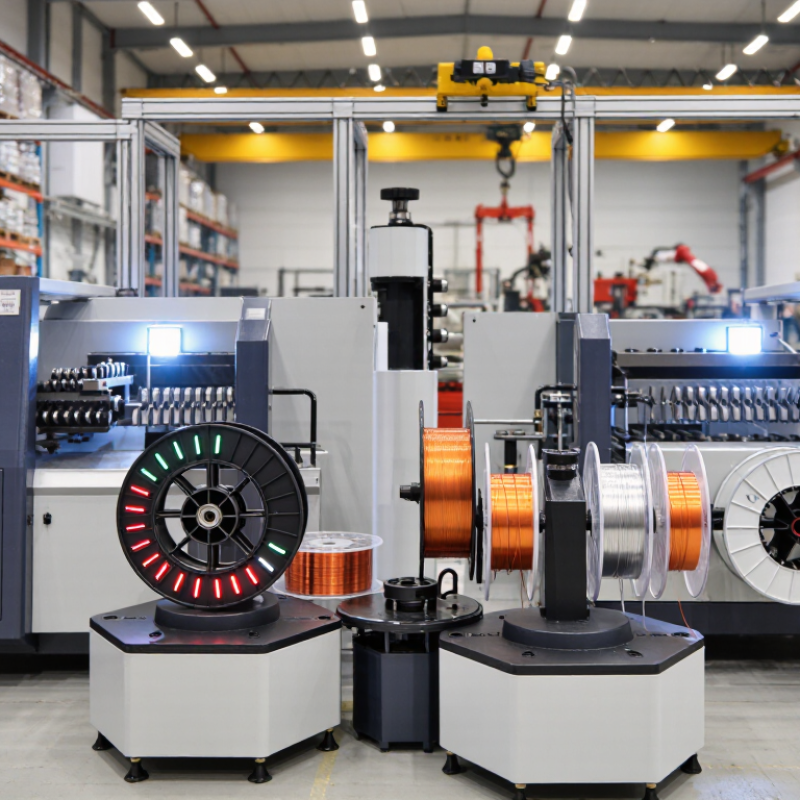
How to Choose a Winding Counting Machine?

Classify winding counting machines by winding method, wire size, and count range

How to Choose a Winding Counting Machine?

Winding counting machines should be classified by winding method before comparing features. Single-spindle models suit simple coils and controlled production. Multi-spindle machines improve output when several identical coils are needed. Traverse-winding systems guide wire across the bobbin, creating even layers. Random-winding systems place wire with less precise distribution and often support flexible coil shapes. Check how the machine controls tension, speed, and stopping position. A clean stop matters when the final turn must align with the terminal.

Wire size is another practical dividing line. Fine wire needs sensitive tension control and a stable guide. Excessive pulling can stretch insulation or change the coil’s resistance. Thicker wire requires stronger holders, wider guides, and enough torque during acceleration. Measure the actual wire, including insulation. That small detail is often missed. I have seen a machine appear suitable until coated wire rubbed against a narrow guide.

Count range determines whether the machine fits both current and future work. Low-count machines work well for small coils, sensors, and short windings. High-count models are better for transformers, motors, and precision inductors. Confirm the counting resolution, maximum turns, and reset method. Digital displays help, but they do not replace calibration. A count can drift after maintenance or sudden speed changes. Test three sample coils, compare their measured turns, and record the result. The “perfect” specification may still fail in daily production.

Translate production needs into bobbin diameter, turns, RPM, and duty-cycle data

How to Choose a Winding Counting Machine?

Selecting a winding counting machine starts with production facts, not a catalog photo. Record the bobbin core diameter, maximum outer diameter, width, and material weight. Measure the actual bobbin, including flanges. Small differences can affect clearance and counting accuracy. Measure it twice.

Next, calculate the required turns per bobbin and the acceptable counting tolerance. A 500-turn coil needs different control than a 50,000-turn coil. Record wire diameter, winding pitch, and target tension, because these values influence the finished diameter. Do not guess. A spreadsheet may look precise while using inaccurate measurements. That weakness should be challenged before purchasing equipment.

RPM must match the process, not simply the motor rating. Estimate line speed from bobbin circumference and required turns per minute, then check acceleration and stopping time. High RPM is useless if the wire slips or the counter misses pulses. Also define the duty cycle: minutes per batch, batches per shift, cooling intervals, and daily operating hours. A machine for occasional sampling may fail under continuous production. In a trial, run a full-size bobbin and inspect the final diameter, turn count, tension, and heat. Document both successful settings and failed ones. Those imperfect results often reveal the machine’s real working limits.

Set count accuracy targets in turns and percentage, then verify encoder resolution

Choosing a winding counting machine starts with a clear accuracy target. Define the required count in turns, then express the same tolerance as a percentage. For example, a coil requiring 500 turns may allow ±2 turns, equal to ±0.4 percent. Both figures matter. Turns are practical on the production floor, while percentages help compare different coil sizes.

Check the encoder resolution before trusting the display. An encoder with 1,000 counts per revolution may provide 0.001 revolution per count, but the final accuracy also depends on gearing, signal processing, shaft movement, and mechanical slip. Confirm whether the stated resolution refers to raw counts or multiplied counts. I have seen specifications look impressive until testing revealed vibration and wire tension errors. A controlled trial with several winding speeds is more reliable than a brochure figure. Keep a record of actual counts, not only programmed values.

Tips: Test at the smallest and largest target counts. Compare five repeated windings. Inspect whether errors increase near direction changes or speed changes. Recheck calibration after the machine warms up. A simple encoder may be enough for a loose tolerance, but high-precision coils need finer feedback and stable mechanics. Do not assume higher resolution guarantees accuracy. That assumption deserves testing.

Compare sensor, encoder, and PLC systems by RPM, memory, and batch-record capacity

How to Choose a Winding Counting Machine?

The counting system should match your actual RPM, memory needs, and batch-record requirements. Sensor-based machines are simple and cost-effective for steady, moderate-speed winding. They detect marks, turns, or pulses, but vibration and dust may cause missed counts. Their internal memory is often limited. They may store only basic totals, settings, or the latest batch result.

Encoder systems measure shaft movement more precisely. They suit higher RPM, frequent acceleration, and applications requiring consistent length or turn accuracy. An encoder can provide detailed position data, but it needs correct alignment and calibration.

PLC systems offer the strongest control over recipes, alarms, operator permissions, and batch records. They can connect counting data with timestamps, lot numbers, rejected quantities, and production conditions. However, more memory does not automatically mean better records. Poor data structure still creates confusing reports.

Tips: Test the machine with your real spool, wire surface, and speed range. Check accuracy during starting and stopping, not only at constant RPM. Ask how many batches the system stores locally and whether records can be exported. In our trials, the fastest machine was not always the most reliable. Slippage appeared only after long runs. That detail changed the selection. Also review recovery after power loss. A system that restores counts clearly can prevent costly disputes, even when its maximum RPM looks less impressive.

Assess safety and total cost with IEC 60204-1, ISO 12100, and OEE metrics

How to Choose a Winding Counting Machine?

A winding counting machine should protect operators while delivering repeatable counts. IEC 60204-1 provides a useful reference for electrical equipment and control-system safety. Check emergency stops, protective bonding, wiring quality, control enclosures, and unexpected restart prevention. A machine can look tidy yet hide weak isolation practices. Ask for electrical drawings, test records, and clear maintenance instructions. Compliance still requires proper application and verification.

ISO 12100 supports a structured risk assessment before purchase. Observe the actual winding process, not just the product brochure. Identify pinch points near rollers, rotating spindles, threading areas, and access doors. Guards should prevent contact without creating difficult changeovers. Consider noise, sharp wire ends, manual loading, cleaning, and fault recovery. Keep the risk assessment visible. Small oversights become expensive habits.

OEE metrics reveal the total cost more honestly than purchase price. Measure availability, performance, and quality during a controlled production trial. Record setup time, stoppages, counting errors, rejected coils, operator training, energy use, and planned maintenance. A machine with high speed but frequent recalibration may produce poor OEE. Include spare parts, software support, inspection time, and downtime in the calculation. One missed maintenance interval can distort the result. I would not trust optimistic figures based only on ideal test material. Real production includes dust, variable tension, rushed changeovers, and occasional human error. That uncomfortable detail matters.

FAQS

How should winding counting machines be classified?

Classify them by winding method, wire size, and count range. Single-spindle machines suit simple, controlled production. Multi-spindle models suit repeated identical coils. Traverse winding creates even layers, while random winding supports flexible shapes.

What should I check for fine wire?

Fine wire needs sensitive tension control and a stable guide. Excessive pulling may stretch insulation or change resistance. Measure the coated wire, not only the bare conductor. Small details matter.

What machine features suit thicker wire?

Thicker wire needs strong holders, wider guides, and enough acceleration torque. Check whether the wire rubs during movement. A narrow guide can damage coating.

How do I choose the correct count range?

Low-count machines suit small coils, sensors, and short windings. High-count models suit transformers, motors, and precision inductors. Confirm maximum turns, count resolution, and reset behavior. Leave room for future production.

How can I set a realistic counting accuracy target?

Define the tolerance in turns and percentage. For 500 turns, ±2 turns equals ±0.4 percent. Turns help operators work quickly. Percentages help compare different coil sizes.

Does higher encoder resolution guarantee accurate counts?

No. Final accuracy also depends on gearing, signal processing, shaft movement, vibration, and mechanical slip. Check whether specifications describe raw or multiplied counts. Test several speeds instead. Not always.

What testing should happen before purchase?

Test the smallest and largest target counts. Compare five repeated windings. Inspect errors during speed changes and direction changes. Recheck calibration after warming the machine. Test real coils.

How should safety and total cost be evaluated?

Review emergency stops, guards, wiring, protective bonding, and restart prevention. Assess pinch points near spindles, rollers, doors, and threading areas. Use risk assessment methods and verify the actual machine. Calculate OEE using availability, performance, and quality. Include setup time, rejected coils, maintenance, training, energy, and downtime. A fast machine may still perform poorly.

Conclusion

Choosing the right Winding Counting Machine requires matching its design to the actual production process. Start by classifying machines according to winding method, wire size, and counting range. Then convert production requirements into practical data, including bobbin diameter, target turns, operating speed, and duty cycle. These details help determine whether the machine can maintain stable performance during continuous operation and handle the required workload.

Set clear counting accuracy targets in both turns and percentage, and verify that the encoder resolution is sufficient for the application. Sensor-based, encoder-based, and PLC-controlled systems should be compared by maximum RPM, data memory, batch-record capacity, and ease of operation. Finally, evaluate guarding, emergency controls, and risk reduction in line with IEC 60204-1 and ISO 12100 principles. Considering total ownership cost, maintenance, downtime, and OEE will help ensure the selected machine delivers reliable counting accuracy and long-term production value.

Madeline

Madeline

Madeline is a dedicated marketing professional with a wealth of expertise in our company's core offerings. With a keen understanding of the industry, she brings a unique perspective to her role, consistently delivering high-quality content that highlights the superior aspects of our products. As......