
Choosing a Coil Winding Machine Automatic is not merely a price comparison. It is a production decision involving wire tension, winding speed, insulation safety, tooling flexibility, and long-term maintenance.
The global electric motor market is expanding alongside demand for automation, electrification, and energy-efficient components. Grand View Research reported continued growth in the electric motor market, while MarketsandMarkets identified automation and precision manufacturing as important drivers for advanced winding equipment. These reports do not select a machine for you. They reveal the pressure behind the decision.
Small details matter.
A loose guide can create uneven layers. A worn nozzle can damage enamel insulation. An attractive cycle-time claim may ignore setup changes, rejected coils, or operator training. That is where practical evaluation becomes essential. As winding-technology specialist Dr. Andreas Kroll puts it, “The best winding machine is not the fastest one; it is the one that delivers stable quality every shift.” This principle should guide the seven tips ahead.
The evaluation should examine actual production conditions. Consider wire diameter, coil geometry, bobbin tolerance, programmable tension, spindle accuracy, changeover time, and technical support. Ask for sample trials using your own wire and components. Request measured results, not polished demonstrations.
No checklist is flawless. Even experienced buyers can underestimate software compatibility or spare-part delays. A careful decision leaves room for those uncertainties. The right Coil Winding Machine Automatic should improve repeatability, reduce avoidable waste, and remain useful when product designs change.
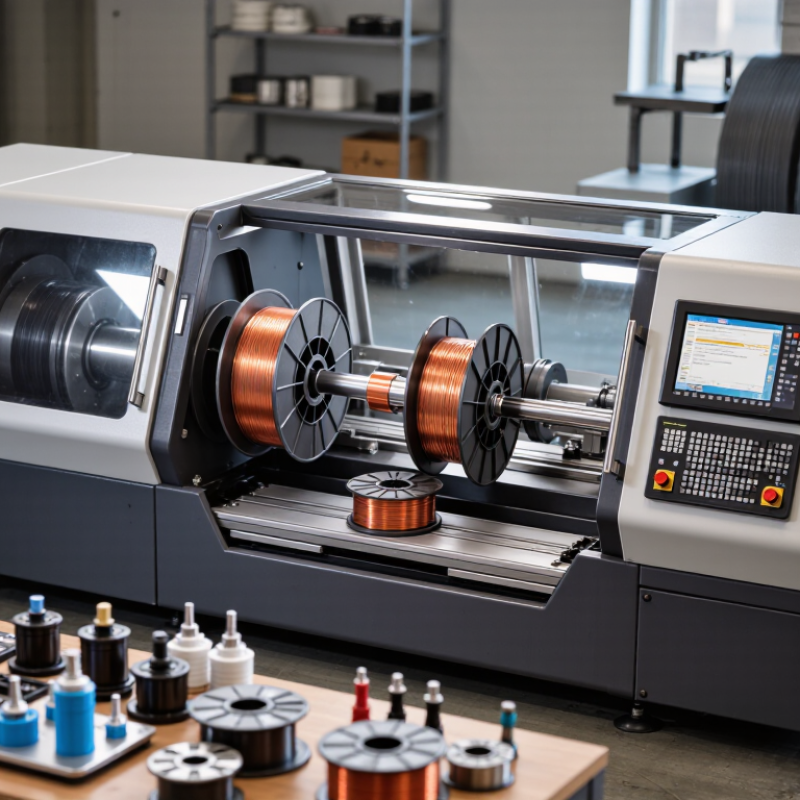
Tip 1: Define the coil before choosing the machine. Record wire diameter, winding length, coil height, inner diameter, and insulation type. These details affect spindle capacity, tension control, and tooling. A small measurement error can create loose turns or damaged enamel. Measure real samples, not only drawings.
Tip 2: Connect machine specifications with production goals. Estimate daily output, batch sizes, changeover frequency, and acceptable rejection rates. For example, a laboratory may value flexible programming, while a factory may need stable high-speed winding. Ask how quickly operators can load wire and adjust guides. Fast winding is not useful if setup takes an hour. This is often overlooked.
Tip 3: Check quality requirements at the coil level. Decide whether each winding needs fixed turn counts, controlled wire tension, precise layering, or automatic stopping after a fault. Request trial winding with your actual wire and bobbin. Examine the finished coil under magnification. Look for crossed turns, uneven layers, insulation marks, and loose ends. Keep test records, including speed and tension settings.
A reliable selection also considers operator skill, maintenance access, spare tooling, and future product changes. Leave room for uncertainty. Your first production estimate may be optimistic. Review rejected coils from current operations, if available, and use them to set realistic targets. Clear requirements make supplier discussions more technical, measurable, and dependable.
Define Your Coil Winding Requirements and Production Goals
Use these planning targets to compare automatic coil winding machines. Production volume, winding speed, wire-size compatibility, repeatability, setup time, and automation level should match both your current requirements and expected growth.
Choosing an automatic coil winding machine starts with the coil, not the machine catalog.
Define the winding pattern, bobbin shape, wire diameter, insulation type, and required turns. A flyer winder suits many standard bobbin coils, while a needle winder handles compact stators and restricted spaces. Toroidal coils need a dedicated shuttle system.
Wire specifications decide machine performance. Fine enamelled wire may need lower tension and smoother guides. Thick wire demands stronger pay-off control and a larger bending radius. Check tension range, spindle speed, traverse accuracy, and the machine’s ability to store different winding programs. Small errors can damage insulation or create uneven layers.
The International Energy Agency reported over 14 million electric car sales in 2023, increasing demand for traction-motor coils and repeatable production. The U.S. Department of Energy’s Electric Motor Systems Technology Roadmap also identifies motor efficiency and manufacturing quality as major industrial priorities. These reports support investing in controlled winding, but capacity alone is not enough.
Measure the actual coil.
Match the machine to your production volume, wire range, coil geometry, and changeover frequency. Ask for sample winding tests using your real wire and bobbin. Check scrap rates, not only advertised speed.
A faster machine may waste more copper if tension control is unstable. I have seen specifications look ideal on paper, yet the first trial exposed poor end positioning. Leave room for that uncomfortable possibility.
1. Measure winding precision before comparing speed. Check wire tension stability, traverse accuracy, and layer alignment. A 0.1 mm shift can create uneven insulation clearance. Request sample coils, not only catalog specifications.
2. Confirm repeatability across multiple batches. One successful coil proves little. Record resistance, wire length, and finished height.
3. Match spindle speed to wire diameter. Higher speed may increase heat, vibration, and breakage. The U.S. Department of Energy estimates motor systems consume about 46% of global electricity, so efficient motion control deserves attention.
4. Examine automation features carefully. Automatic wire feeding, cutting, stripping, and changeover can reduce handling errors. However, automation adds maintenance points. I have seen impressive machines slow down when a basic sensor becomes unreliable.
The International Federation of Robotics reported 541,302 industrial robots were installed worldwide in 2023. That figure supports the shift toward automated production, but it does not guarantee better coils. 5. Look for closed-loop tension control, real-time alarm messages, and recipe management. These functions help operators reproduce settings instead of relying on memory.
6. Evaluate the PLC and HMI together. Menus should show speed, tension, turns, torque, and fault history clearly. A confusing screen wastes skilled labor. 7. Check data traceability and export options. Production records should connect each coil with its recipe and inspection results. The IEA reported nearly 14 million electric cars were sold globally in 2023, increasing pressure for consistent motor components. Still, every factory has different wire sizes, fixtures, and quality limits. Test your own materials before accepting a control system’s promises.
Choosing an automatic coil winding machine starts with compatibility, not speed.
Confirm coil dimensions, wire diameter, winding method, spindle range, and control-system communication. A machine may accept the wire but still produce uneven tension. Ask for sample coils and inspect the first production run closely. Small differences matter.
Safety deserves equal attention.
Check guarding, emergency stops, electrical protection, and safe access for threading. IEC 60204-1 addresses electrical equipment for machinery, while ISO 12100 supports risk assessment and risk reduction. Requirements vary by location, so request documented conformity evidence.
The U.S. Bureau of Labor Statistics reported 2.6 million private-industry nonfatal workplace injuries in 2023.
That figure is a reminder that safety cannot remain a sales promise. It must be visible at the operator’s station.
Maintenance needs should be measured before purchase.
Review lubrication points, spare-part availability, software support, cleaning access, and fault-diagnosis tools. Deloitte’s manufacturing research has reported that predictive maintenance can reduce downtime by 30% to 50% in suitable applications. Results differ. They depend on sensors, training, and disciplined data collection.
Do not ignore manual checks. A loose tension roller can damage insulation before an alarm appears.
The best machine is not always the fastest. It is the one your technicians can safely adjust, maintain, and verify every shift. Sometimes, a simpler design performs better.
Compare Total Costs, Supplier Support, and Long-Term Value
Choosing an automatic coil winding machine starts with more than its purchase price. In production work, I check output, wire range, winding accuracy, changeover time, and operator training. These are practical indicators of value. A machine that looks affordable may consume more electricity or require frequent adjustments. Include tooling, software updates, maintenance, spare parts, installation, and expected downtime in the calculation. Ask for written figures, not optimistic promises.
Supplier support often determines whether production stays stable. Check response times, technician availability, training quality, and spare-part storage. Request a sample service schedule. Ask who handles problems after installation. A clear manual matters when an operator faces uneven tension at 2 a.m. Remote diagnosis can save hours, but it cannot replace skilled local support. Speak with existing users if possible. Their experience may reveal delays that sales documents omit.
Long-term value depends on flexibility. Confirm whether the machine can handle future coil sizes, different wire materials, and revised winding patterns. Examine upgrade options, data records, safety features, and maintenance access. I once focused too heavily on speed and underestimated changeover losses. That mistake changed my evaluation method. Now I compare usable output per shift, not brochure capacity. A spreadsheet helps, but it can still lie. Allow room for training gaps, material waste, and imperfect operating conditions.
Check wire tension, traverse accuracy, and layer alignment first. A 0.1 mm shift can reduce insulation clearance. Request sample coils.
One good coil proves little. Test several batches and record resistance, wire length, and finished height. Repeatability matters.
Sometimes, but higher speed can increase heat, vibration, and wire breakage. Match speed to wire diameter. Faster is not always better.
Automatic feeding, cutting, stripping, and changeover can reduce handling errors. However, each feature adds maintenance points. Sensors can fail.
Closed-loop tension control, live alarms, and recipe storage support consistent production. Operators should not depend on memory alone. That approach can fail.
The screen should clearly show speed, tension, turns, torque, and fault history. Confusing menus waste skilled labor. Clear screens help.
Link each coil with its recipe and inspection results. Exportable records make problems easier to trace. A simple spreadsheet may be enough.
Confirm coil size, wire diameter, winding method, spindle range, and communication needs. Test your own materials before approval. Catalog claims can mislead.
Check guarding, emergency stops, electrical protection, and safe threading access. Safety must be visible beside the operator. Paper evidence is not enough.
Review lubrication points, spare parts, software support, cleaning access, and diagnostic tools. Technicians must adjust the machine safely each shift. Simpler can be better.
Choosing the right Coil Winding Machine Automatic starts with clearly defining your production goals, including coil size, output volume, winding speed, and required quality standards. The machine should match your coil design, wire diameter, insulation type, and winding method. Consider whether you need a single-spindle, multi-spindle, or customized system, and evaluate its winding precision, tension control, programmable settings, and automation features. A reliable control system can improve consistency, reduce operator errors, and support efficient production changes.
Before making a decision, check the machine’s compatibility with your existing equipment, available workspace, electrical requirements, safety functions, and maintenance procedures. Easy access to essential components, clear operating instructions, and dependable technical support can help reduce downtime. Finally, compare the total cost of ownership rather than focusing only on the purchase price. Include installation, training, energy use, spare parts, maintenance, and future upgrade options. The best machine should provide stable performance, practical support, and long-term value for your specific manufacturing needs.