
China has become a major sourcing market for Copper Coil Winding Machine equipment. Its manufacturers serve transformer, motor, generator, and electrical component producers worldwide. However, supplier quality differs significantly. A reliable comparison should examine engineering experience, machine stability, and after-sales support. Product photos alone are not enough.
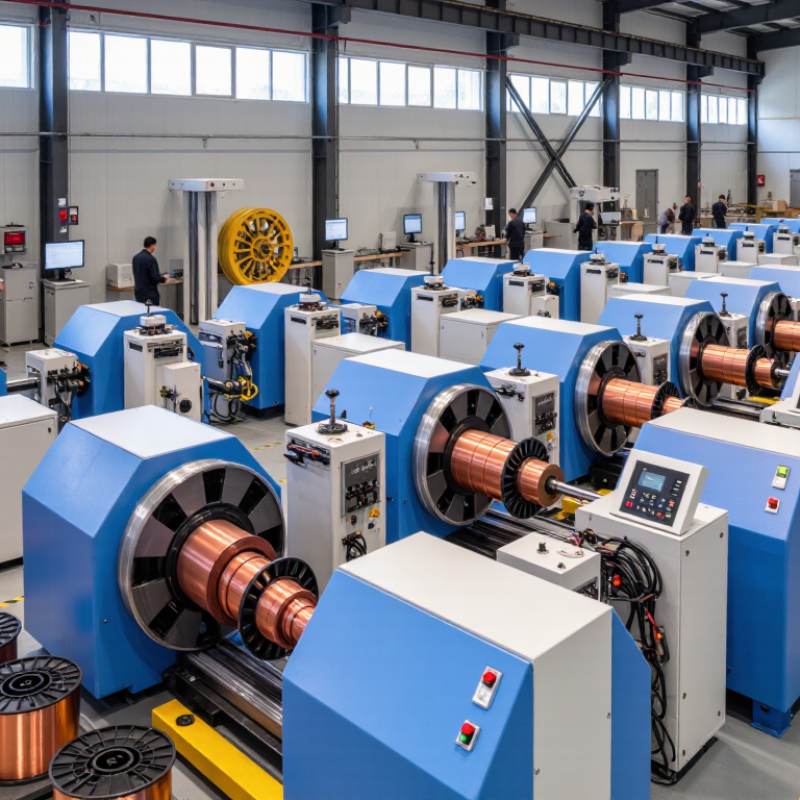
Experienced buyers usually check winding wire ranges, spindle speed, tension control, traverse accuracy, and programmable settings. They also review sample coils made with comparable wire and insulation materials. A practical factory visit can reveal important details, including cable routing, control cabinet organization, and operator safety features. These small observations often matter more than impressive brochures. They show how carefully a supplier builds and tests each machine.
No supplier is perfect. Some manufacturers communicate well but provide limited customization. Others offer advanced automation but respond slowly when faults occur. This weakness deserves honest attention. Reliable suppliers should explain commissioning steps, spare-parts availability, warranty terms, and training arrangements clearly. Factory acceptance testing, documented inspection records, and stable export experience can further support a purchasing decision. Buyers should request references from similar applications, not only large international projects. A machine that performs well in a showroom may behave differently during continuous production.
The following guide introduces leading China Copper Coil Winding Machine suppliers and compares their technical strengths, manufacturing capabilities, and service reliability. It also considers application fit, customization depth, delivery coordination, and long-term operating value. Careful evaluation reduces risk and supports a more confident investment.
When comparing China’s top copper coil winding machine suppliers, start with the conductor, not the machine brochure. Copper resistivity is commonly rated at 0.01724 Ω·mm²/m at 20°C for annealed copper. This value connects wire length, cross-sectional area, and electrical resistance.
The basic formula is R = ρL/A. A 100-meter wire with a 1 mm² area has about 1.724 ohms at 20°C. Thinner wire raises resistance quickly.
Temperature also matters. Copper resistance increases as the coil becomes hot during operation, so testing only at room temperature may mislead engineers.
In practical winding work, stable tension protects the wire’s area and insulation. Excessive tension can stretch a fine conductor and change its resistance. Uneven layering creates air gaps, sharp bends, and local heating. Experienced technicians check wire diameter with calibrated tools, measure resistance after winding, and inspect the coil under controlled temperature. Machine settings should match wire size, bobbin geometry, turn count, and insulation thickness.
A calculation can look right.
I still treat 0.01724 as a reference, not a promise. Copper purity, temper, temperature, contact resistance, and measurement technique can shift the result. Supplier discussions become more useful when they include sample coils, winding-speed records, tension data, and test methods. Some specifications sound precise but leave these details unclear. That gap deserves questions before production begins.
China Top Copper Coil Winding Machine Suppliers
Machine Types, Wire Ranges, and Tension Accuracy for Transformer Coils
Transformer coil production needs more than a fast spindle. Suppliers typically offer layer winding machines, flyer winding machines, and foil winding systems. Layer machines suit insulated round copper wire and controlled turns. Flyer machines handle larger coils with flexible guiding. Foil systems serve low-voltage windings with flat copper conductors.
Wire range must match the actual conductor, not a general catalog figure. Many machines handle round wire from 0.1 to 3.5 millimeters. Some configurations support thinner enamelled wire or larger conductors. Ask for tested samples. A machine rated for 0.05 millimeters may still struggle with fragile insulation, sudden acceleration, or uneven spool feeding. Small details matter.
Tension accuracy directly affects turn spacing, insulation stress, and coil geometry. Closed-loop systems commonly state control within ±1% of the set value. Advanced configurations may approach ±0.5% under stable conditions. These figures need context. Wire diameter, spool inertia, humidity, and speed can change performance. No machine maintains perfect tension everywhere. That is worth remembering. Reliable suppliers should provide calibration records, sample winding data, and adjustment procedures. They should also explain how the controller reacts during acceleration and braking. A strong specification looks useful, but production verification matters more. A short factory trial can expose vibration, slipping, or uneven layering before installation.
Copper demand is rising with transformers, motors, and grid equipment. The International Copper Study Group reported global refined copper usage at approximately 26 million tonnes in 2023. This pressure makes supplier capability more important than a low quotation. Strong suppliers should explain their CNC axis configuration, positioning method, and verified production capacity. Three or five controlled axes can improve wire guidance around irregular coils. However, axis count alone proves little.
A 0.01 mm positioning claim sounds precise, but it is not complete evidence. Ask whether this means absolute accuracy, repeatability, or a short laboratory test. In factory trials, thermal drift, wire tension, tooling wear, and operator setup can change the result. A useful acceptance test should record coil dimensions, winding speed, tension stability, rejection rates, and continuous running hours. Capacity also needs physical proof. Review installed equipment, shift schedules, monthly output, maintenance records, and recent delivery performance. A supplier may achieve high speed briefly, yet struggle during a ten-hour production cycle.
Tips: Request sample coils and a written FAT protocol. Compare measured positioning data with actual wire placement. Check whether 0.01 mm performance remains stable after warm-up. Ask for production figures by coil type, not only total annual output. I would also inspect calibration records; this step is easy to overlook. Even experienced buyers can overvalue precision numbers and undercheck service response, spare parts, and process training.
China Top Copper Coil Winding Machine Suppliers
Quality Standards: IEC 60076, ISO 9001, and Electrical Safety Requirements
Reliable copper coil winding equipment should support transformer production under controlled, measurable conditions. IEC 60076 defines transformer performance requirements, not machine certification. However, its technical expectations influence winding accuracy, insulation quality, and final testing.
For copper coil winding machines, these requirements translate into controlled tension, accurate traverse movement, and repeatable insulation handling. Operators should inspect wire alignment beside the mandrel. Uneven layers can create weak insulation gaps and unnecessary rework. Tension sensors, programmable speed control, and stable braking systems deserve careful evaluation. Small errors become visible in the finished coil.
ISO 9001 adds process discipline. Suppliers should provide inspection records, calibration histories, material traceability, and documented corrective actions. Ask for practical evidence, not attractive claims. Factory acceptance testing should check emergency stops, guarding, grounding, overload protection, and control-panel safety. Electrical cabinets need clear labeling and secure cable routing. Safety interlocks must work during real operating conditions.
A dependable supplier also explains maintenance intervals and operator training. Technical drawings should match the delivered machine. This sounds basic. It is sometimes missed. Buyers should review winding samples, noise levels, stopping accuracy, and insulation handling before approval. Compliance documents may be incomplete or outdated, so independent verification remains sensible. A strong quality system reduces risk, but it cannot replace hands-on inspection.
This chart shows the publication or latest amendment year of widely referenced standards for transformer-related manufacturing quality and electrical safety. IEC 60076 covers power transformers, ISO 9001 defines quality management-system requirements, and IEC 60204-1 addresses the electrical equipment of machines.
For buyers comparing China’s top copper coil winding machine suppliers, lead time means more than a shipping date. Ask about component availability, factory acceptance testing, installation windows, and commissioning support. The IEA’s Global Critical Minerals Outlook 2024 estimates copper demand rising from 26 million tonnes in 2023 to 31 million tonnes by 2035. That pressure can expose weak production planning. Require a dated schedule, not optimism. Delays happen.
Warranty terms should define coverage hours, response times, travel costs, and excluded consumables. A twelve-month warranty means little if a servo fault waits six weeks. Request remote diagnostics, training records, and critical spare-parts lists. Automation must be measured, not advertised. IFR’s World Robotics 2024 recorded 541,302 industrial robot installations in 2023, confirming wider factory automation. However, winding equipment still needs stable tension control and reliable changeover logic. Ask for cycle-time data from similar coils.
Calculate total cost of ownership across five to ten years. Include tooling, copper scrap, energy, software licenses, calibration, labor, downtime, and disposal. A cheaper machine may become expensive through manual rework. Compare OEE evidence from witnessed trials, not brochures. Service capacity and cybersecurity also deserve scoring. My caution: payback models often assume perfect utilization. Recalculate using one planned shutdown and two unplanned stoppages. The result may look less attractive, but it is more credible.
It is the typical resistivity of annealed copper at 20°C. It links wire length, area, and resistance.
Use R = ρL/A. A 100-meter wire with 1 mm² area has roughly 1.724 ohms at 20°C.
Temperature, copper purity, contact resistance, and measurement technique can change the result. Room-temperature calculations are only references.
Excessive tension can stretch fine wire and alter its cross-sectional area. Stable tension helps preserve resistance and insulation.
Uneven layers may form air gaps, sharp bends, and local hot spots. The coil may look acceptable but perform poorly.
Settings should match wire diameter, bobbin shape, turn count, insulation thickness, and required winding speed.
No. Axis count alone proves little. Actual wire placement, tension stability, and coil geometry matter more.
Ask whether it means accuracy, repeatability, or a short laboratory result. Test performance after machine warm-up.
Review installed equipment, shift schedules, maintenance records, and recent delivery results. A brief high-speed run proves little.
Request sample coils and a written factory acceptance protocol. Record dimensions, speed, tension, rejection rates, and continuous running hours.
Check calibration records, spare-part availability, service response, and operator training. I would not trust impressive numbers alone.
Yes. Tool wear, thermal drift, setup errors, and unstable tension can change production results. The assumption may fail.
A Copper Coil Winding Machine is essential for producing precise, consistent windings used in transformers and other electrical equipment. With copper resistivity commonly referenced at approximately 0.01724 Ω·mm²/m, accurate control of wire length, tension, and coil geometry is critical for reducing energy loss and maintaining reliable performance. Different machine types support various wire ranges, coil sizes, winding patterns, and automation levels, while advanced CNC systems can provide multi-axis movement and positioning accuracy near 0.01 mm for demanding transformer coil applications.
When evaluating suppliers in China, manufacturers should consider production capacity, engineering support, delivery schedules, warranty terms, and long-term maintenance requirements. Quality verification should include alignment with relevant transformer and quality-management expectations, such as IEC 60076 principles, ISO 9001-based processes, and appropriate electrical safety requirements. A complete supplier assessment should also compare automation features, operator training, spare-parts availability, energy use, and total cost of ownership rather than focusing only on the initial equipment price.
