
China has become a major sourcing base for precision motor and transformer production equipment. A serious review of China Top Wire Coil Winding Machine Suppliers should examine more than price, catalog photos, or export claims. The right supplier must prove repeatable tension control, accurate turn counting, stable wire guiding, and reliable production support.
Industry data explains the growing demand. The International Energy Agency reported that global electric car sales exceeded 14 million units in 2023, increasing demand for traction motors and copper windings. Its Global EV Outlook also highlights China’s dominant position in electric vehicle manufacturing. Meanwhile, the International Energy Agency’s Electricity 2024 report expects electricity consumption to keep rising through 2026, supporting further investment in motors, transformers, and electrical equipment. These trends create practical opportunities for qualified Chinese manufacturers.
A dependable Wire Coil Winding Machine supplier should provide measurable evidence. Look for factory acceptance tests, sample winding videos, motor noise data, tension records, and documented service response times. ISO 9001 certification can support process consistency, but it does not replace independent testing. Check spindle accuracy, programmable winding patterns, changeover time, and compatibility with copper or aluminum wire. Small details matter.
Reports from MarketsandMarkets and Grand View Research indicate continued growth in automated winding and motor manufacturing equipment, although their market definitions differ. That limitation deserves attention. “Top” is not always the largest exporter. It may mean the best fit for your wire diameter, output target, and quality system. A careful comparison should include engineering experience, spare-part availability, software capability, and total ownership cost—not only the first quotation.
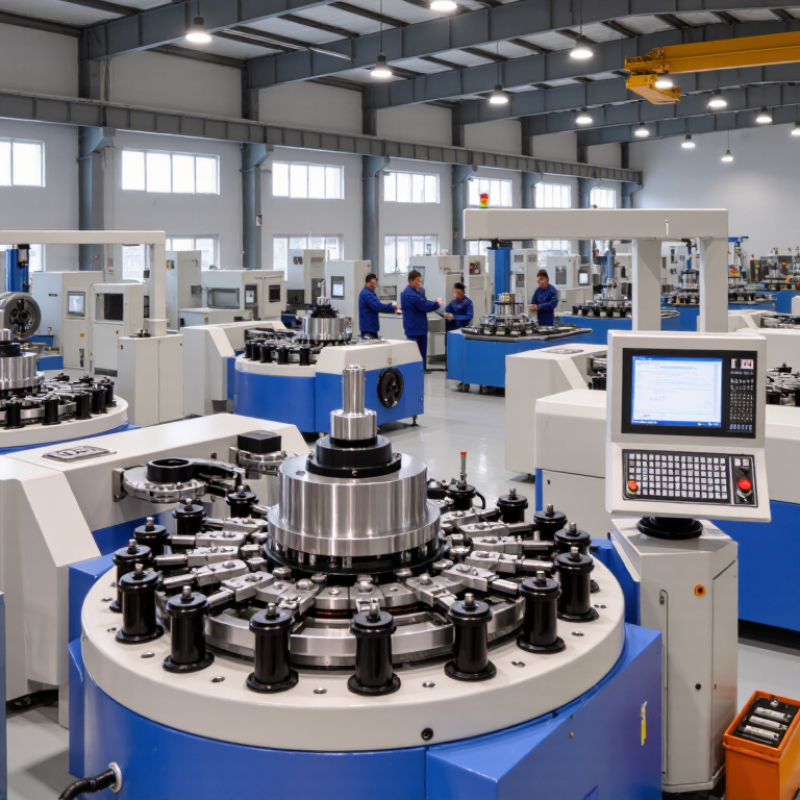
Wire coil winding machines differ by coil shape, wire size, and production speed. Flyer winders suit larger coils and flexible tooling. Spindle winders deliver accurate tension for compact motor coils. Needle winders reach narrow stator slots with controlled wire placement. Toroidal machines guide wire around ring-shaped cores. Each type needs a matching payoff, tensioner, and programmable traverse. In practice, a machine that looks fast may waste wire during acceleration. Check changeover time, not only rated speed.
IEC 60204-1 addresses electrical equipment on machines, from the incoming disconnect to operator controls. A compliant design normally provides a lockable supply disconnect, protective bonding, and overcurrent protection. Exposed conductive parts should connect reliably to the protective circuit. Control voltage selection, enclosure protection, and cable identification also require careful review. Emergency-stop functions must match the machine’s risks and be verified during commissioning. An emergency button alone does not prove safe stopping. Stored energy, rotating spindles, and automatic restart need separate safeguards. This is where some factory inspections become too optimistic.
Before ordering from a Chinese supplier, request electrical schematics, terminal lists, risk-assessment records, and test results. Ask how the machine handles broken wire, door opening, overspeed, and loss of air pressure. Confirm that safety circuits reset deliberately, rather than restarting after power returns. Inspectors should verify protective bonding, insulation resistance, emergency-stop performance, and functional operation. IEC 60204-1 is not universal legal approval; local regulations may add requirements. A useful acceptance test uses the actual wire, core, tooling, and production recipe. Small details matter. The first trial may expose tension drift or awkward access that documents miss.
| Data Category | Item / Dimension | Typical or Applicable Data | Selection or Compliance Relevance |
|---|---|---|---|
| Machine Types | Single-spindle winding machine | One coil is wound at a time; commonly used for prototypes, repair work, and low-volume production. | Suitable when flexible tooling and simple changeover are more important than maximum output. |
| Multi-spindle winding machine | Two or more winding positions can operate in parallel, depending on the machine design. | Improves throughput for repeatable products but requires coordinated tension, traverse, and indexing control. | |
| Flyer winding machine | The wire is guided by a rotating flyer around a stationary or indexed winding area. | Often selected for stator, transformer, and other applications requiring controlled wire placement. | |
| Needle winding machine | A needle or nozzle inserts wire into slots or around compact coil-forming areas. | Useful for concentrated windings and restricted geometries where a flyer cannot access the winding area. | |
| Toroidal winding machine | A shuttle or winding device passes wire through the center of a toroidal core. | Requires core-size compatibility, shuttle capacity, controlled wire tension, and accurate turns counting. | |
| Automatic coil winding and forming line | Combines winding with operations such as wire cutting, stripping, forming, taping, insertion, or testing. | Appropriate for high-volume production where automation, traceability, and cycle-time control are required. | |
| Core Technical Specifications | Wire diameter compatibility | Must be stated as a machine-specific range, for example 0.02–1.00 mm, rather than assumed from the machine name. | The usable range depends on wire insulation, spool design, tension system, nozzle, and product geometry. |
| Maximum winding speed | Specified in revolutions per minute or meters per second; the practical value varies with wire diameter and coil dimensions. | Compare speed using the same wire size, coil geometry, winding pattern, and quality target. | |
| Turns-counting accuracy | Controlled by encoder feedback, spindle mechanics, acceleration settings, and the machine control system. | Request measured production results at the required turns count instead of relying only on a catalog claim. | |
| Wire-tension control | May be passive, dancer-controlled, closed-loop, or servo-controlled; the operating range is application-specific. | Stable tension reduces loose turns, wire deformation, insulation damage, and variation in coil dimensions. | |
| Traverse and pitch control | The traverse system controls wire distribution across the coil width and can support layer, random, or programmed winding. | Confirm pitch resolution, winding pattern control, and compatibility with the required coil dimensions. | |
| Programmability and data handling | Relevant functions include recipe storage, password levels, alarm history, parameter backup, and production data export. | Important for repeatability, operator control, process traceability, and controlled product changeovers. | |
| Factory acceptance testing | A practical test should use the customer’s wire, bobbin or core, turns count, winding pattern, and target cycle time. | A documented sample run provides more reliable evidence than a generic specification sheet. | |
| IEC 60204-1 Safety Requirements | Scope and edition confirmation | IEC 60204-1 applies to the electrical equipment of machines and should be specified together with the applicable edition and local requirements. | The standard does not replace a complete machine risk assessment or other product-specific safety standards. |
| Main disconnecting device | The machine should have a suitable supply-disconnecting means that can isolate the electrical equipment from the supply. | The device should be identifiable, accessible, appropriately rated, and suitable for the installation. | |
| Protection against electric shock | Protection includes basic insulation, barriers or enclosures, protective bonding, and measures against indirect contact. | Verify enclosure integrity, accessible-part protection, and documented test results. | |
| Protective bonding circuit | Exposed conductive parts should be connected to the protective bonding circuit, with continuity verified during testing. | Bonding conductors, terminals, doors, panels, and removable covers require appropriate mechanical and electrical arrangements. | |
| Overcurrent protection | Conductors and equipment should be protected against overcurrent using correctly selected protective devices. | Protection ratings must match conductor capacity, load characteristics, prospective fault current, and coordination requirements. | |
| Control-circuit protection | Control circuits require suitable protection and clear separation or identification where different voltage levels are present. | Check fusing, transformer or power-supply protection, terminal identification, and wiring segregation. | |
| Emergency stop function | Where required by the risk assessment, emergency-stop devices and their stopping functions should be provided and clearly identified. | The emergency stop should be readily accessible, manually reset, and designed so that reset does not automatically restart the machine. | |
| Safeguarding and interlocking | Guards, access doors, and interlocking devices should prevent or limit access to hazardous moving parts during operation. | Winding spindles, flyers, cutters, belts, and pinch points require a documented safeguarding strategy. | |
| Verification and documentation | Relevant checks include protective-bonding continuity, insulation resistance, voltage tests where applicable, functional tests, and documentation review. | Request electrical schematics, component lists, wiring identification, test records, operating instructions, and maintenance information. | |
| Supplier Evaluation Dimensions | Application engineering capability | Ability to review wire material, insulation, core or bobbin geometry, turns, winding pattern, tension, and target takt time. | A technically suitable machine is more important than a broad but unverified model range. |
| Electrical documentation quality | Expected documentation includes circuit diagrams, protective-device ratings, I/O lists, manuals, risk-related information, and inspection records. | Complete documentation supports commissioning, maintenance, audits, and compliance verification. | |
| Spare parts and service | Evaluate availability of tension components, nozzles, guides, sensors, belts, fuses, control components, and wear parts. | Lead time and technical support directly affect equipment availability after installation. | |
| Acceptance criteria | Define measurable criteria for turns accuracy, tension consistency, coil dimensions, insulation condition, cycle time, alarms, and safety functions. | Written acceptance criteria reduce disputes and make supplier comparisons objective. | |
| Regulatory and installation fit | Confirm supply voltage and frequency, earthing arrangement, machine footprint, compressed-air requirements, language needs, and destination-market rules. | IEC 60204-1 compliance should be assessed together with the purchaser’s local electrical, machinery, and workplace-safety obligations. |
Note: Performance ranges and machine configurations are application-dependent. Final specifications and IEC 60204-1 conformity should be verified from the machine’s technical file, risk assessment, electrical drawings, and test records.
Needle winders place wire accurately inside narrow slots. They need controlled wire guidance and stable tension. Check the core shape, wire diameter, and required coil pattern. The wrong machine may create damaged insulation or uneven layers.
Not necessarily. It usually describes traverse positioning, not tension control. Request tension values in grams or cN. Also ask for sensor accuracy and response time. A precise display can still hide unstable winding.
No. That speed may apply only to a small, light coil. Larger coils increase vibration, heat, and winding stress. Request speed curves for your actual wire and core. Speed claims need context.
Use the actual wire, core, tooling, and production recipe. Run the machine continuously for several hours. Check layer alignment, tension drift, wire breaks, and reject rates. Inspect the finished coil, not only the machine screen. The first trial may reveal awkward access.
Check the lockable supply disconnect and protective bonding. Verify overcurrent protection and clearly identified cables. Test insulation resistance and emergency-stop performance. Review stored energy, rotating parts, and automatic restart risks. An emergency button alone is insufficient.
Request electrical schematics, terminal lists, risk-assessment records, and test results. Ask how the machine reacts to broken wire and open doors. Check responses to overspeed and lost air pressure. Safety circuits should reset deliberately after a fault. Power return must not cause unexpected restarting.
Compare wire diameter, coil geometry, tooling, speed, and tension control. Semi-automatic machines may cost about 8,000 to 25,000 dollars. Fully automated lines can exceed 100,000 dollars. These figures are only rough guides. A low quote may omit testing or tooling.
Typical delivery periods may range from eight to twenty weeks. Confirm the factory acceptance test date in writing. Check warranty coverage for servo drives, tension systems, and replacement tooling. Ask for spare-parts stock and remote response times. Online support may look stronger than reality.
Choosing the right Wire Coil Winding Machine requires evaluating both technical performance and supplier reliability. Different machine types serve applications such as transformer coils, motor windings, and precision electronic components, while IEC 60204-1 safety requirements help ensure proper electrical design, guarding, emergency controls, and operator protection. When reviewing suppliers in China, buyers should examine ISO 9001 certification, factory capabilities, production capacity, and quality-control procedures rather than relying only on quoted prices.
Important performance indicators include tension control accuracy of approximately 0.01 mm, stable operation at speeds up to 10,000 rpm, programmable winding patterns, and consistent wire placement. Supplier verification should include valid CE marking where applicable, documented FAT testing, and GB/T 19001 quality records. A complete comparison should also consider total cost, lead time, installation support, warranty coverage, spare-parts availability, and the reach of the supplier’s global service network. This balanced approach can reduce purchasing risks and support dependable long-term production.
