
Choosing among China’s top small coil winding machine manufacturers requires more than comparing prices or catalog photographs. A reliable supplier should understand wire tension, coil geometry, spindle speed, and insulation requirements. These details directly affect winding consistency, production speed, and rejection rates. A capable Small Coil Winding Machine may handle fine copper wire, compact bobbins, or customized coil shapes with stable performance.
This guide examines manufacturers through practical factors, including engineering experience, factory capabilities, machine customization, quality control, and after-sales support. Evidence matters. Buyers should request videos of actual production, sample coils, technical drawings, and test results before placing an order. A factory inspection or live demonstration can reveal details that brochures often overlook, such as vibration, uneven wire placement, or difficult control-panel settings.
There is no universal “best” manufacturer. Application needs differ. A supplier experienced in transformer coils may not excel at miniature motor windings. Buyers should also confirm service response times, spare-parts availability, software support, and operator training. Certifications can strengthen confidence, but they do not replace performance testing. Sometimes, a lower-priced machine appears attractive, yet its hidden maintenance costs become significant later. That possibility deserves attention. This comparison aims to provide a balanced starting point for identifying qualified Chinese manufacturers and selecting equipment that fits real production conditions, not just impressive specifications.
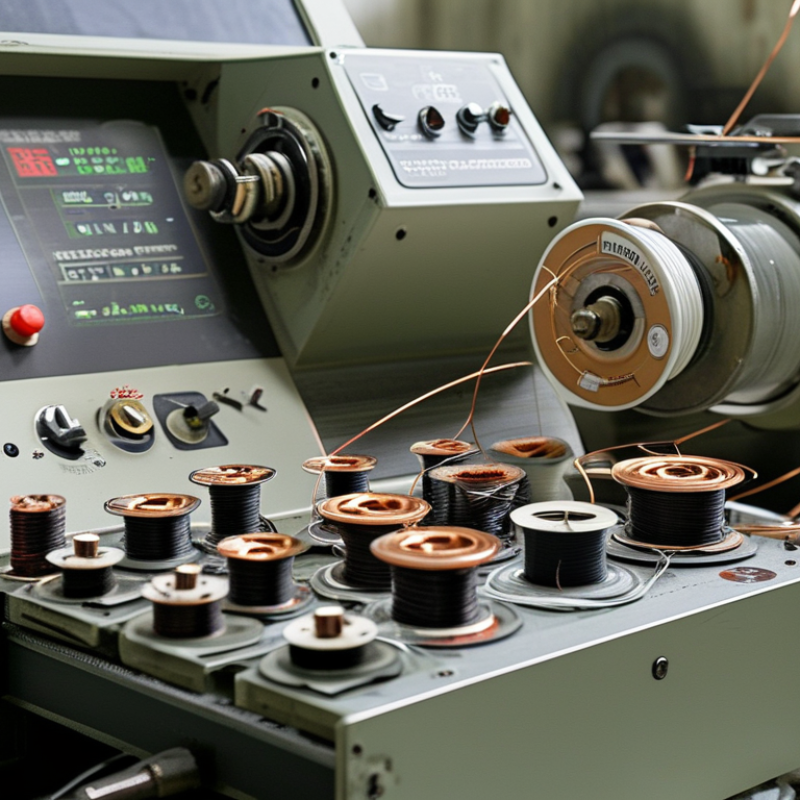
A small coil winding machine is compact equipment that winds insulated copper or aluminum wire around a bobbin, core, or former. It controls turns, winding speed, wire tension, and layer spacing. Some models also cut, strip, solder, and test the finished coil. Operators use them for sensors, relays, inductors, small transformers, and miniature motors.
The machine’s value is precise repetition. A loose turn can create uneven resistance and weak insulation. Excessive tension may stretch the enamel coating.
In practical production, I check wire diameter, spindle alignment, tension settings, and the programmed turns before increasing speed. The first trial is rarely perfect. That deserves more attention.
The International Energy Agency’s Global EV Outlook 2024 reported nearly 14 million electric car sales in 2023. This growth increases demand for compact motor and sensor components. The U.S. Department of Energy’s Motor Systems Market Assessment estimates that motor systems consume about 70% of industrial electricity, an older benchmark that still explains why efficient winding matters. Small machines help reduce material waste and support flexible batches. Their output still depends on calibration, operator skill, and inspection. A low price cannot replace stable tension control.
Chinese coil winding machine manufacturers increasingly combine servo control, precision mechanics, and digital monitoring in one production system. Servo motors regulate winding speed and positioning with fine accuracy. Tension sensors help keep copper wire firm without damaging its enamel coating. This matters when producing compact coils with many turns.
A programmable logic controller coordinates spindle movement, wire guides, cutting tools, and safety interlocks. Multi-axis systems can wind, insert, tape, and form coils within one automated cycle. Some machines also use vision cameras to inspect wire placement and detect missing turns. The operator can review production data through a touchscreen interface. Useful details include winding length, tension limits, cycle time, and error records.
Testing remains essential. Experienced engineering teams usually verify machines with sample materials before final delivery. They check noise, temperature, winding consistency, and changeover time. A factory may also test different wire diameters and coil shapes. Results should be documented, not explained only by verbal promises.
No machine is perfect.
Real production conditions can expose problems that factory demonstrations miss. Dust, uneven wire quality, or frequent model changes may reduce performance. Reliable manufacturers therefore provide parameter training, spare-part guidance, and practical adjustment support. Yet buyers should still inspect sample coils and request measurable acceptance standards. Technology helps, but careful validation protects the investment.
Evaluating China’s top small coil winding machine manufacturers requires more than comparing online prices. The electric motor market is expanding, and Grand View Research forecasts a 7.1% CAGR from 2023 to 2030. The IEA also reported nearly 14 million electric car sales in 2023. These figures increase demand for precise, repeatable winding equipment.
Start with the sample coil, not the brochure. Ask each manufacturer to wind your actual wire, bobbin, and insulation system. Check wire tension, winding accuracy, spindle speed, noise, and rejection rates. Request production records from at least three recent machines. Small details matter. A loose turn can become a costly field failure.
Confirm whether the machine supports recipe storage, automatic wire break detection, quick changeovers, and traceable parameter logs. Measure cycle time under continuous operation, rather than during a short demonstration. I would also inspect the electrical cabinet, spare-part list, and operator interface. A polished showroom can hide weak service capacity. ISO 9001 certification helps, but it does not prove machine performance. Ask for calibration records and factory acceptance criteria. One practical weakness remains: some suppliers provide impressive samples but vague long-term data. Require a signed test report, clear warranty terms, remote support response times, and references from comparable applications.
Evaluation framework: The chart shows a practical 100-point weighting model for comparing small coil winding machine suppliers. It focuses on measurable machine capability, production efficiency, quality control, and after-sales support rather than company or brand data.
Small coil winding machines serve different production needs, from prototype work to stable batch manufacturing.
Manual and semi-automatic models suit laboratories, repair shops, and low-volume projects. Operators can adjust wire tension by hand and inspect each layer closely. This flexibility helps when coil dimensions change often. However, manual control may create uneven tension during long runs.
Fully automatic winding machines support higher output and repeatable coil geometry.
They can control spindle speed, traverse movement, wire tension, and programmed turns. Precision matters for sensor coils, miniature transformers, relays, and compact motors. A suitable machine should match the wire diameter, bobbin size, winding pattern, and required production speed. Small details matter.
Multi-spindle machines improve efficiency when several identical coils are needed.
Needle winding systems work well with narrow spaces and delicate components. Flyer winding systems often handle broader bobbins and stronger wire. In practical testing, operators should check wire breakage, end placement, insulation damage, and temperature changes. Early samples may pass visual inspection but fail electrical testing. That is a useful warning.
Machine selection is not only about speed.
It also involves tooling access, setup time, maintenance, and operator skill. A faster machine can become inefficient when changeovers are frequent. I have found that simple controls sometimes support better production decisions. Still, every application needs testing with the actual wire and component materials. Assumptions can be costly.
Choosing a reliable Chinese coil winding machine supplier requires more than comparing prices. In factory evaluations, I examine wire tension stability, spindle runout, pitch accuracy, and changeover time. Ask for recorded test results, not attractive sample videos. A serious supplier should explain how sensors detect broken wire and how operators correct alignment errors.
Industry data supports this cautious approach. The International Federation of Robotics reported 541,302 industrial robots installed worldwide in 2023, showing the growing demand for repeatable automation. However, automation only performs well when calibration and maintenance are controlled. Request a factory acceptance test using your actual wire diameter, bobbin, winding pattern, and production speed. Check whether the supplier records test parameters for traceability.
Documentation matters. Review electrical drawings, software backups, spare-parts lists, training plans, and response times. Confirm applicable conformity documents for your destination market. ISO 9001 registration is useful, but it does not guarantee winding accuracy. Audit the production floor if possible. Look for labeled components, protected cables, clean assembly benches, and technicians who can answer technical questions directly. A low quotation may exclude tooling, installation, or future software support. That is where many budgets fail. Also, do not rely only on one successful trial; repeated testing can reveal tension drift, uneven layers, or heating problems. Reliability is demonstrated over time, not during one polished demonstration.
: Servo motors control winding speed and spindle positioning. Tension sensors protect the wire’s enamel coating. A programmable controller coordinates guides, cutting tools, and safety interlocks. Some systems add cameras for placement inspection.
Manual or semi-automatic machines suit laboratories and repair workshops. Operators can adjust tension by hand. They can inspect each winding layer closely. Long runs may produce uneven tension.
Automatic models suit higher output and repeatable coil geometry. They control speed, turns, tension, and traverse movement. They work with sensor coils, miniature transformers, relays, and compact motors. The wire and bobbin must match the programmed settings.
Test the actual wire diameter, bobbin, winding pattern, and production speed. Check wire breakage, end placement, insulation damage, and coil temperature. Electrical testing matters too. Visual inspection alone can miss serious faults.
Multi-spindle systems improve output for identical coils. Needle winding suits narrow spaces and delicate components. Flyer winding often handles broader bobbins and stronger wire. The best choice depends on component shape and material strength.
Request electrical drawings, software backups, spare-parts lists, and training plans. Ask for recorded test parameters and response times. Confirm conformity documents for the destination market. An international quality certificate does not guarantee winding accuracy.
Request repeated tests, not one attractive demonstration. Measure tension drift, uneven layers, heating, noise, and changeover time. Inspect protected cables and labeled components. Reliability takes time to prove.
Dust, inconsistent wire quality, and frequent model changes can reduce performance. Operators may need parameter training and adjustment support. Tooling, installation, or software support may cost extra. Low prices can hide these expenses.
Not necessarily. Frequent changeovers can reduce practical output. A simpler interface may support better operator decisions. Still, assumptions can be costly. Test the real production materials before purchasing.
This guide explains what a Small Coil Winding Machine is and how it supports the efficient production of compact coils for applications such as electronics, sensors, transformers, motors, and other precision components. It introduces the key technologies commonly used by Chinese manufacturers, including programmable control systems, adjustable winding tension, automatic wire feeding, precise positioning, and quality monitoring. These features can improve winding consistency, reduce material waste, and support different coil specifications.
The article also compares machine types and their suitable applications, from semi-automatic equipment for flexible production to fully automatic systems for higher-volume manufacturing. It outlines practical factors for evaluating China’s top small coil winding machine manufacturers, including technical expertise, customization capability, production accuracy, equipment stability, after-sales service, delivery standards, and communication efficiency. Finally, it offers guidance on choosing a reliable Chinese supplier by reviewing product quality, testing procedures, documentation, customer support, and long-term cooperation potential.
