1 / 3

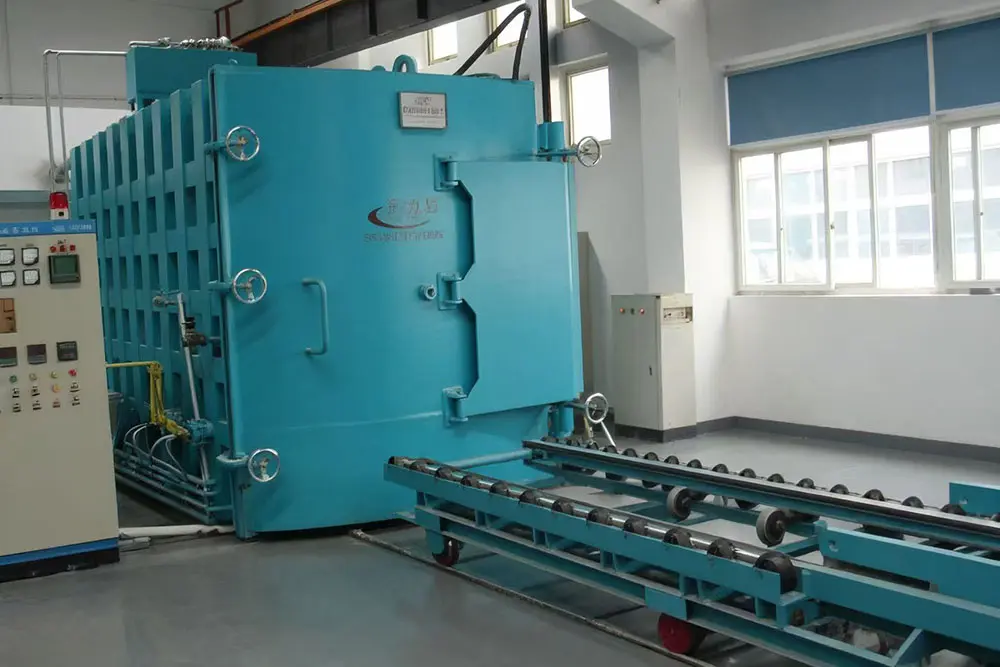
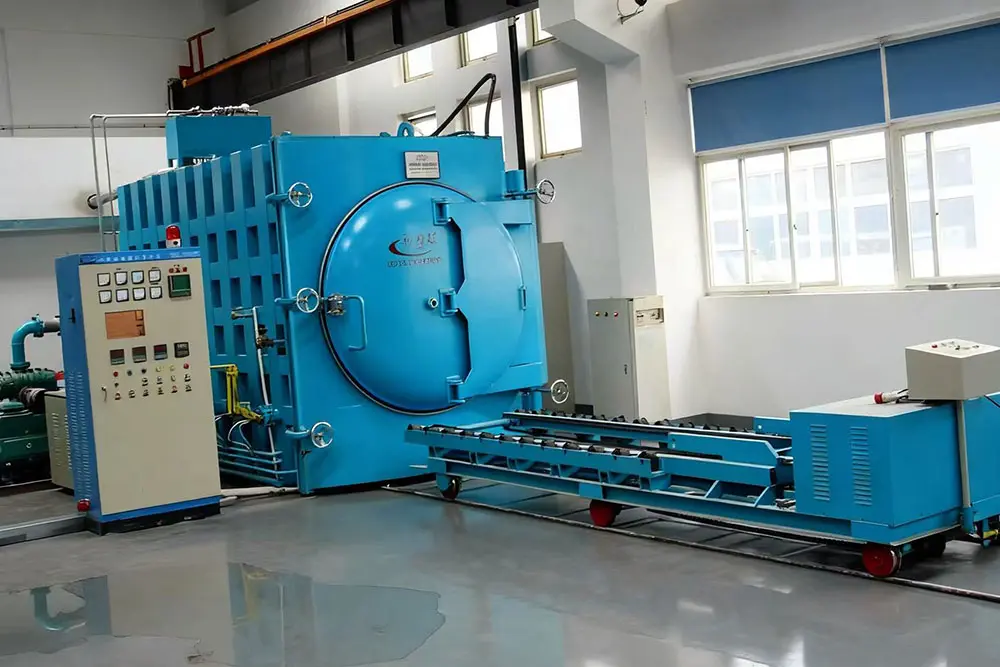
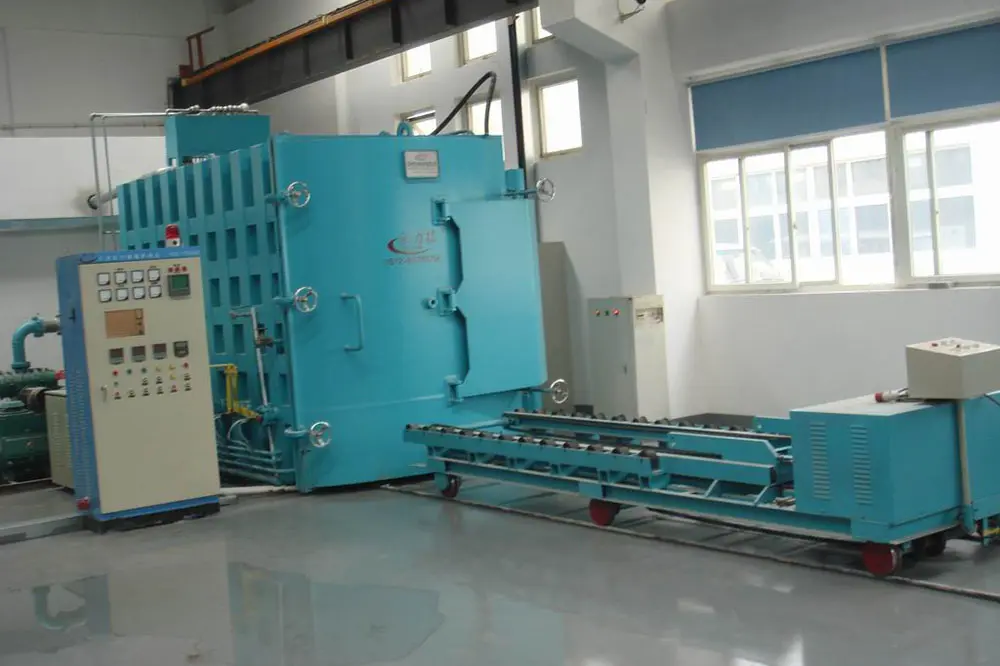
| Furnace type | Horizontal signal room |
| Effective size of inner liner | 1000x1100x2200mm (W)x(H)x(L) |
| Effective size of inner liner (High Capacity) | 1200x1200x2600mm (W)x(H)x(L) — Note: Rated furnace capacity 10000KG, Power 180KW, vacuum unit: 2X+70 pumps + 150 Roots pumps. |
| Max loading capacity | 5000 kg |
| Maximum furnace temperature | 950°C (900°C / 800°C–850°C is enough for your material) |
| Limit vacuity | 100 Pa |
| Pressure rising rate | ≤ 50 Pa/h |
| Air exhausting time | 30 min (Vacuum 400 Mpa) |
| Heating power | 120 kW (3×40 kW) |
| Temperature uniformity | ≤ ±2°C (Insulation) |
| Temperature of furnace surface | Room temperature + 35°C |
| Temperature Points | 3 |
| Temperature control method | Automatic by program |
| Operation mode | Manual (Furnace door) |
| Cooling water capacity | 10~12 T (Tons per hour) |
Operates in a high-vacuum atmosphere, completely isolating materials from air during annealing. This eliminates oxidation, decarburization, and impurity adsorption, ensuring original purity.
Offers a wide temperature range (RT–1200°C) with ±5°C control accuracy. It enables precise tuning of processes to relieve internal stress and optimize magnetic properties.
Suitable for stainless steel, carbon steel, amorphous alloys, and magnetic materials across electrical, automotive, and machinery sectors.
Integrates intelligent control systems for automated ramping and monitoring. Equipped with overheating protection and vacuum leakage alarms.
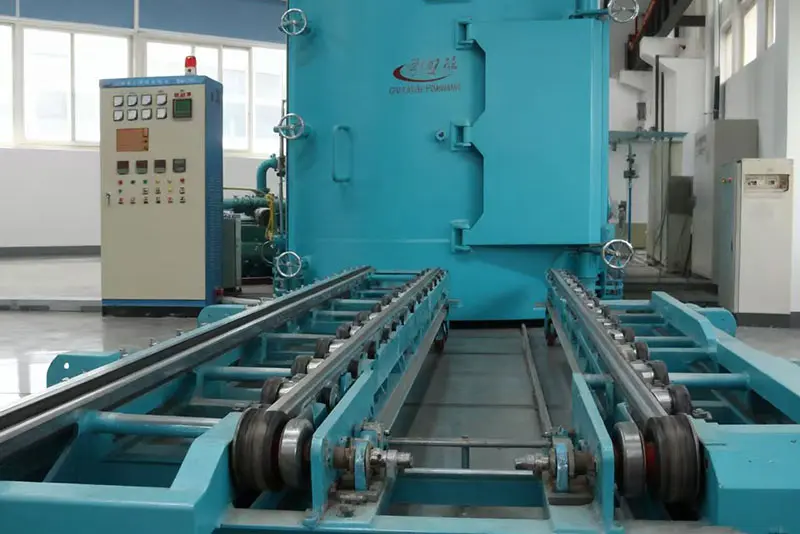
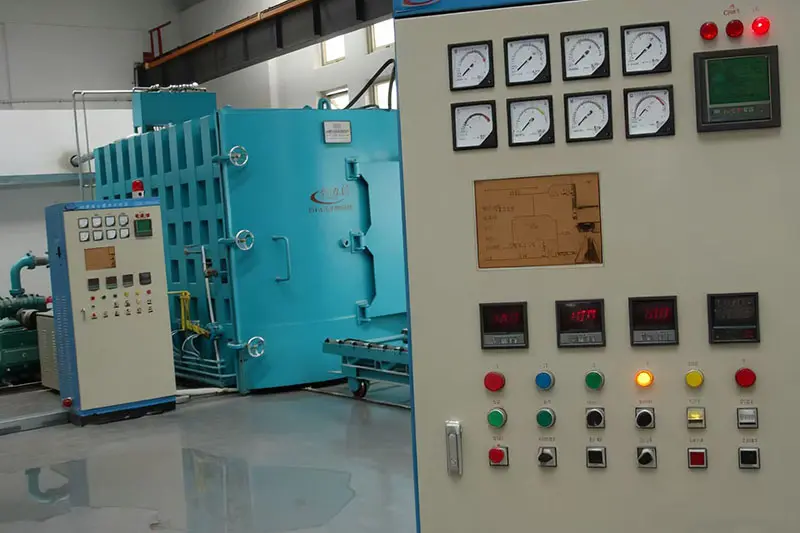
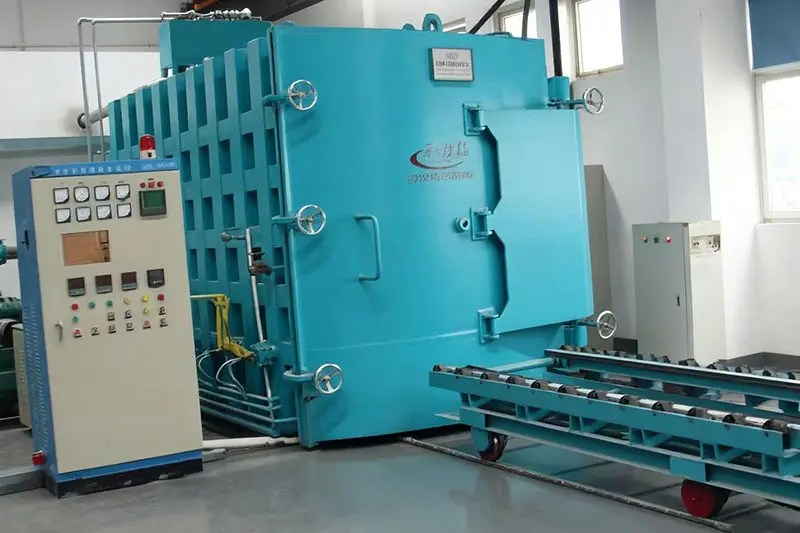
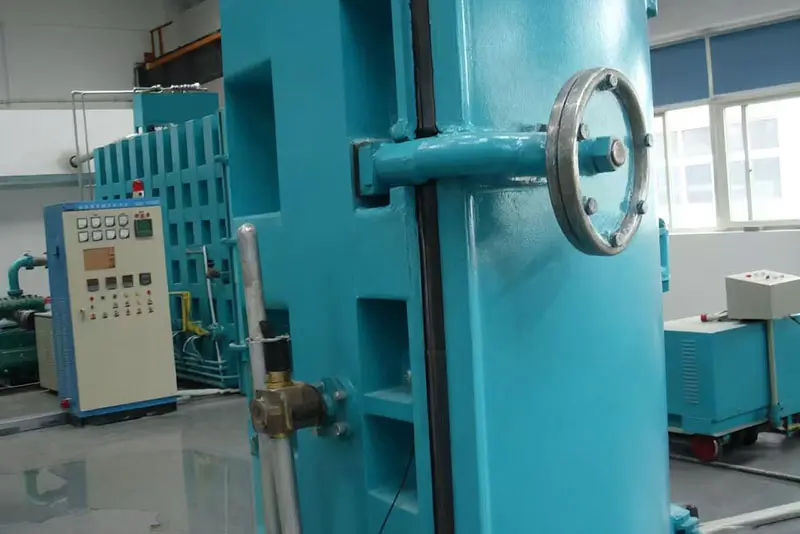
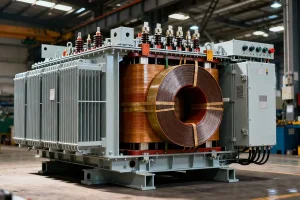
Essential for annealing grain-oriented (GO) and non-oriented (NGO) silicon steel cores. Under vacuum, it eliminates oxidation and reduces internal stress, directly enhancing magnetic permeability and lowering core loss for transformers and motors.
For high-strength metal parts in automotive and machinery sectors. Performs vacuum annealing to relieve internal stress caused by forging or machining, preventing deformation and improving material toughness.
Processes amorphous alloy cores and rare metal materials like titanium alloys. The vacuum environment avoids oxidation of fragile alloys, maintaining their atomic structure and stabilizing magnetic properties.