1 / 2

| Item | Specification |
|---|---|
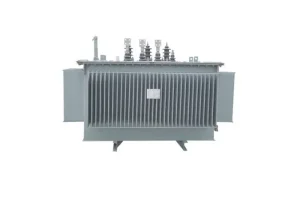
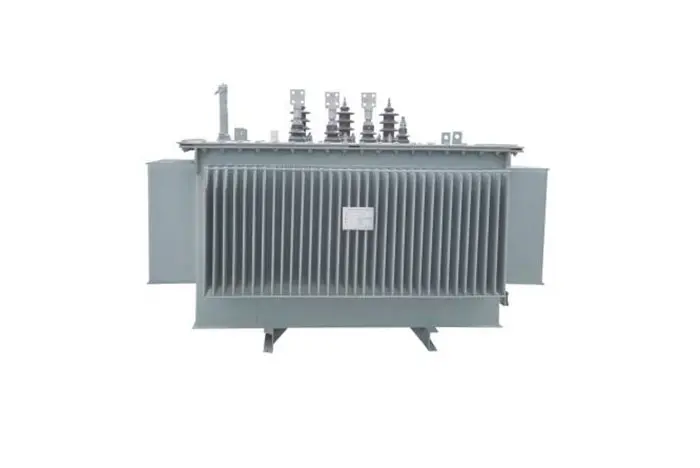
| Product Model | Example: S16-M-100/10 (S=Three-Phase; 16=Amorphous Efficiency Class; 100=kVA; 10=HV kV) |
| Rated Capacity (Sn) | 30kVA ~ 2500kVA |
| Phase / Frequency | Three-Phase; 50Hz/60Hz (±1% tolerance) |
| Connection Group | Dyn11 (standard) / Yyn0 (optional) |
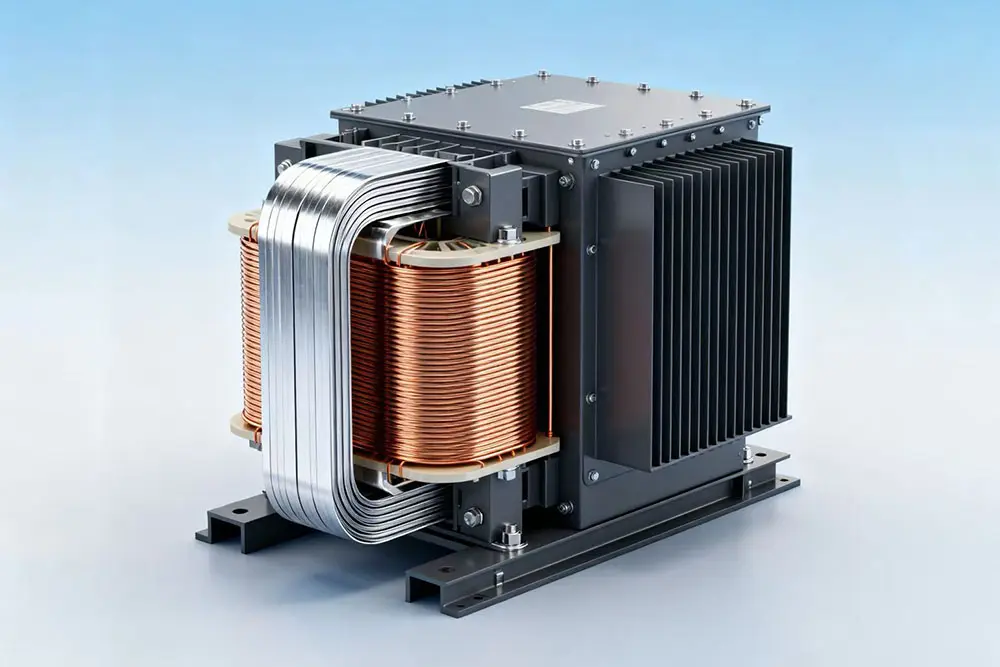
| Core Structure | Three-phase five-limb amorphous core (zero air gap, low magnetic hysteresis) |
| Condition | Specification Details |
|---|---|
| Ambient Temperature | -25°C ~ 40°C (optional -40°C with anti-freeze additive) |
| Altitude | ≤1000m (5% derating at 1500m, 10% at 3000m) |
| Humidity | ≤90% @25°C (no condensation); Protection Class: IP23 (outdoor) / IP20 (indoor) |
| Service Life | 25 years (extended by low core loss and sealed tank) |
| Parameter | Value | Test Condition |
|---|---|---|
| No-Load Loss (Po) | ≤80W (30% lower than S13) | Rated voltage / frequency |
| Load Loss (Pk) | ≤1120W | Rated current, 75°C |
| Short-Circuit Impedance (Uk%) | 4% ~ 5% | 75°C, ±10% tolerance |
| No-Load Current (Io%) | ≤0.5% | Rated voltage |
| Item | Value |
|---|---|
| Rated Capacity | 100kVA |
| HV/LV Voltage/Current | 10kV/5.77A; 0.4kV/144.3A |
| No-Load / Load Loss | ≤80W / ≤1120W |
| Core Material | 1K101 Amorphous Ribbon |
| Cooling Method | ONAN |
As its most core advantage, the amorphous alloy material has an irregular atomic structure, resulting in much lower hysteresis loss than traditional silicon steel sheet cores. Its no-load loss is 30%-70% lower than that of conventional silicon steel transformers. Especially suitable for long-term operation scenarios such as power grids and residential areas, it can significantly reduce ineffective energy consumption, lowering users’ electricity costs and overall energy usage.
Due to the small magnetostriction coefficient of the amorphous alloy core (resulting in low core vibration amplitude), the transformer operates at a lower noise level (usually 5-10dB lower than traditional products). No additional noise reduction measures are needed, making it suitable for noise-sensitive environments such as commercial buildings, residential communities, and hospitals, enhancing user experience.
Amorphous alloy exhibits excellent magnetic permeability, achieving high magnetic flux even under low magnetic field strength. This optimizes the transformer’s load loss and improves energy conversion efficiency (mostly meeting national Level 1 energy efficiency standards). Especially when the grid voltage fluctuates, it can maintain stable output more effectively, reducing efficiency loss during power transmission.
The core material has better heat resistance and mechanical strength, enabling it to withstand current surges exceeding the rated load for a short time (e.g., during peak electricity consumption periods). With lower total heat generation, it effectively prevents component aging or failures caused by overload, extends the stable operation cycle of the equipment, and reduces maintenance costs.
On one hand, the low-loss and low-heat characteristics slow down the aging of internal components (such as coils and insulating materials), allowing the equipment to have a design life of over 20 years. On the other hand, energy-saving operation directly reduces carbon emissions; additionally, the amorphous alloy material is recyclable, complying with environmental requirements such as "green power grids" and "low-carbon buildings".
Given the long-term energized operation of urban and rural power grids (with a high proportion of no-load time), its advantage of 30%-70% lower no-load loss can significantly reduce long-term energy consumption for power grid operators, and meet the energy-saving requirements of modern power grid upgrading.
It is applicable to the supporting power distribution of new energy projects such as solar photovoltaic (PV) stations and wind farms. Its high efficiency and stable output can minimize energy loss during the conversion and transmission of new energy power, ensuring efficient integration of clean energy into the main grid.
It provides stable power supply for high-power equipment (such as machinery, production lines, and precision instruments) in manufacturing plants. The strong overload capacity can cope with sudden power surges during peak production periods, while low energy loss helps enterprises reduce electricity costs and achieve energy-saving production.
These scenarios require 24-hour continuous power supply (for air conditioning, lighting, and elevators). The transformer’s low no-load loss reduces energy waste during off-peak hours (e.g., late at night), and low noise avoids affecting customer experience and commercial operations.
Installed in community power distribution rooms, its low noise (5-10dB lower than traditional transformers) prevents disturbance to residents’ daily life (especially at night). Meanwhile, long-term energy-saving operation helps property management reduce public electricity expenses.
It is used in hospitals, schools, and libraries. Hospitals require stable power for medical equipment and quiet environments for patients; schools and libraries need to avoid noise affecting teaching and reading—this transformer’s low-noise and high-stability features fully meet these demands.
Data centers operate 24/7 with high power density. The transformer’s high efficiency and low heat generation reduce the load of the cooling system (lower heat output means less energy consumed by air conditioners), while stable power supply ensures the normal operation of servers and data storage equipment.
For off-grid power systems in remote mountainous areas or pastoral areas (powered by small PV or wind energy), its high energy efficiency maximizes the utilization of limited clean energy, ensuring reliable power supply for local residents’ daily life and basic production.