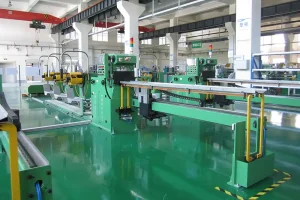
In an era characterized by dynamic global grid modernization and the accelerating transition to renewable energy sources, the role of modern electrical manufacturing factories has undergone a critical paradigm shift. Today's industrial procurement officers, grid infrastructure managers, and transformer manufacturers seek more than just standard suppliers; they require strategic partnerships with factories capable of delivering unprecedented efficiency, high compliance standards, and advanced material handling capabilities.
This white paper explores the essential factors governing wholesale electrical manufacturing, emphasizing the integration of high-precision CNC cross-cutting lines, specialized winding solutions, and advanced magnetic core technologies. As global carbon-neutrality initiatives tighten emission standards, electrical distribution infrastructures must minimize transformer no-load core losses. Transitioning from traditional silicon steel laminations to 3D wound structures and amorphous alloy configurations is no longer an optional upgrade—it is a regulatory necessity.
Electrical manufacturing operates at the heart of global power networks. Historically, conventional planar stacked cores made of Cold-Rolled Grain-Oriented (CRGO) silicon steel dominated the landscape. While reliable, these structures exhibit significant localized magnetic flux density variations, particularly around the corners where overlapping joints create air gaps and core noise due to magnetostriction.
To solve this issue, modern factories utilize 3D Triangular Rolled Cores. By winding continuous silicon steel ribbon around a triangular mandrel, we eliminate traditional corner joints. This results in a balanced three-phase magnetic path, minimizing length discrepancies and reducing no-load losses by up to 25% compared to planar architectures.
For even higher efficiency demands, Amorphous Alloy Cores represent the leading technological standard. Because amorphous metals feature a non-crystalline atomic arrangement, they possess low coercivity and high electrical resistivity, which dramatically suppresses eddy currents. Processing these ultra-thin, highly brittle ribbons (often only 0.025 mm thick) requires specialized machinery, including high-precision CNC shearing lines that avoid cracking and minimize mechanical edge stress.


Global procurement divisions face standard industrial headwinds that threaten margins, delay lead times, and risk final installation failures. Key risk vectors include:
Our manufacturing solutions address these issues at the source. By integrating automated, multi-axis CNC machines and closed-loop hydraulic tension controls, we guarantee uniform structural integrity from core cutting to final outer assembly.
To maintain high reliability, our factory leverages a vertically integrated manufacturing model. Rather than sourcing disconnected machinery from different suppliers, we develop the entire tooling ecosystem internally:
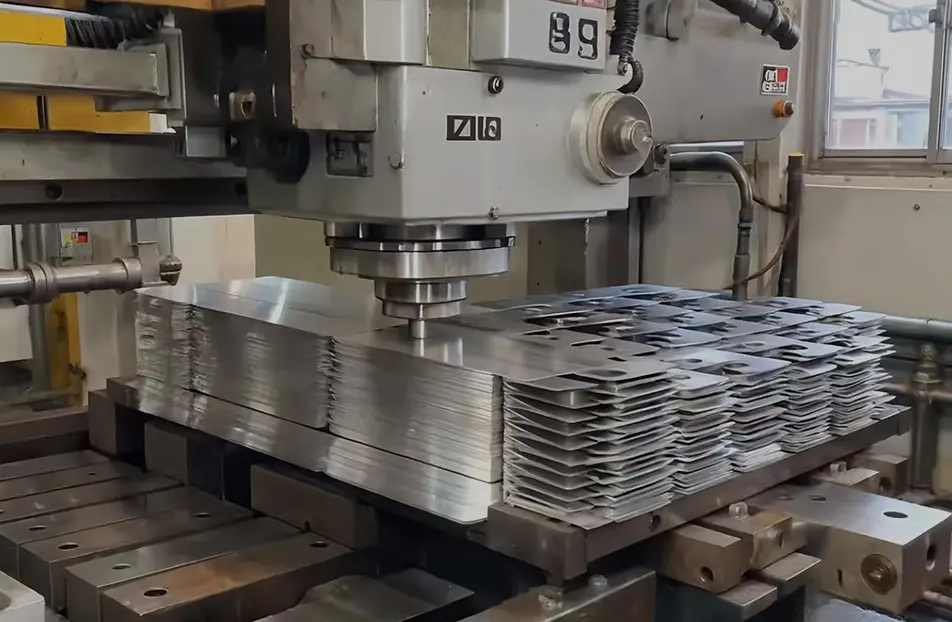
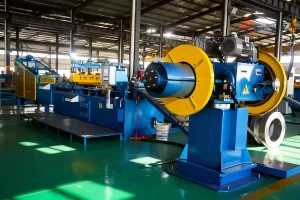
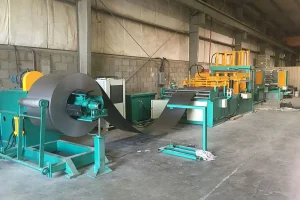
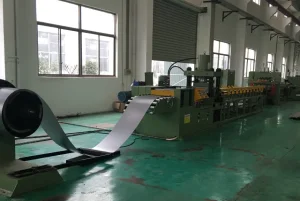
1. Precision Processing: CNC slitting and cross-cutting systems prepare structural coils with minimal shear stress.
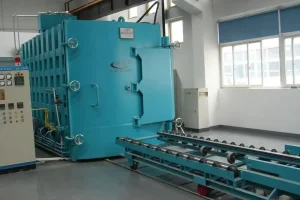
2. Heat Treatment: Deep vacuum annealing furnaces process materials at controlled cooling curves to restore the natural magnetic domains of CRGO and amorphous sheets.
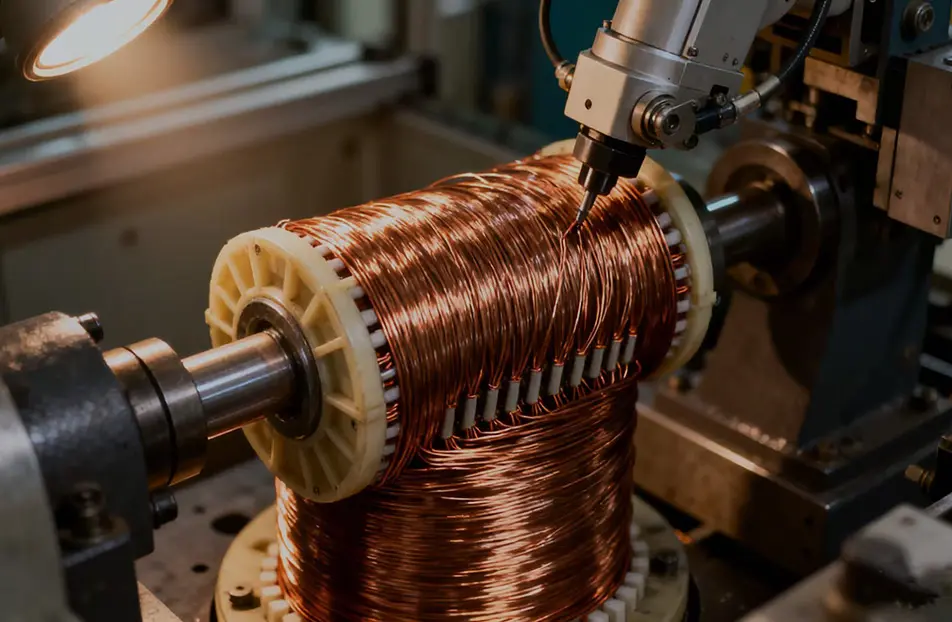
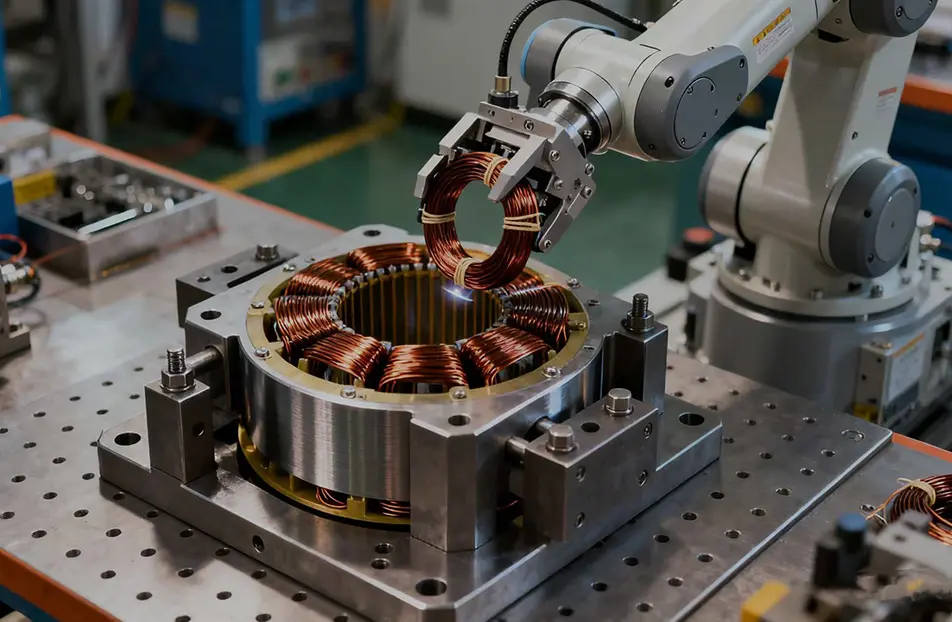
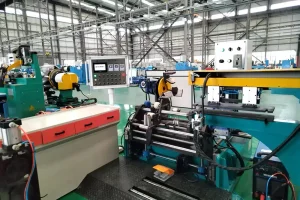
3. Intelligent Winding: Foil-to-wire combined winding units construct dense, low-resistance coils with consistent spatial alignment.
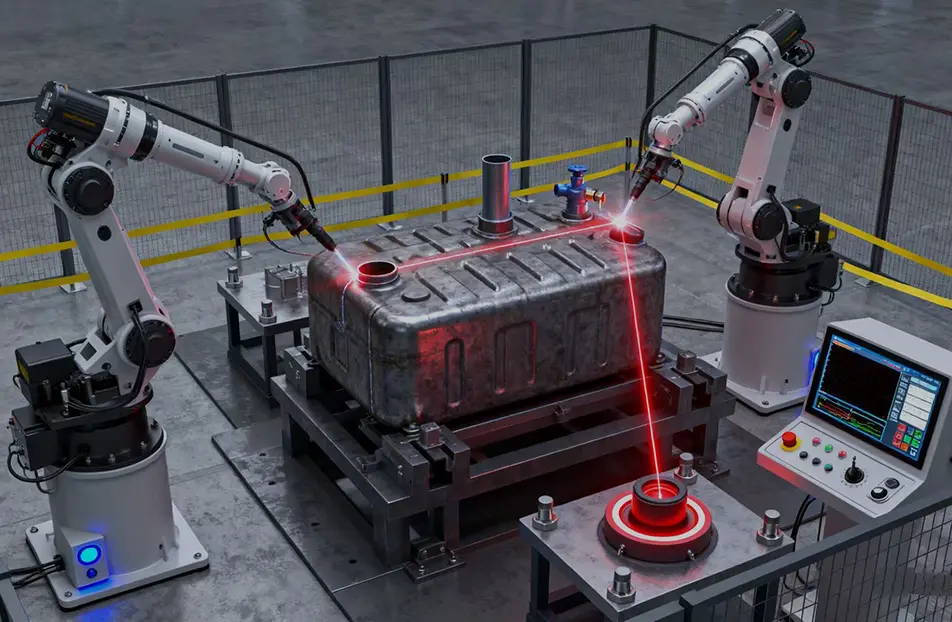
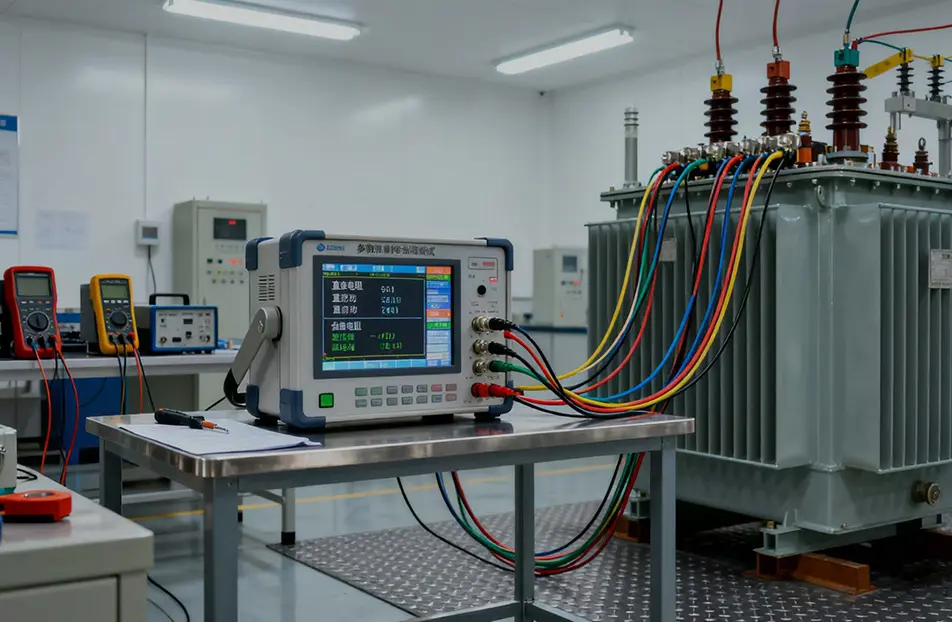
4. Automated Welding & Testing: Robotic tank corrugated fin welders assemble oil containment structures, which are verified using advanced helium leak testing.
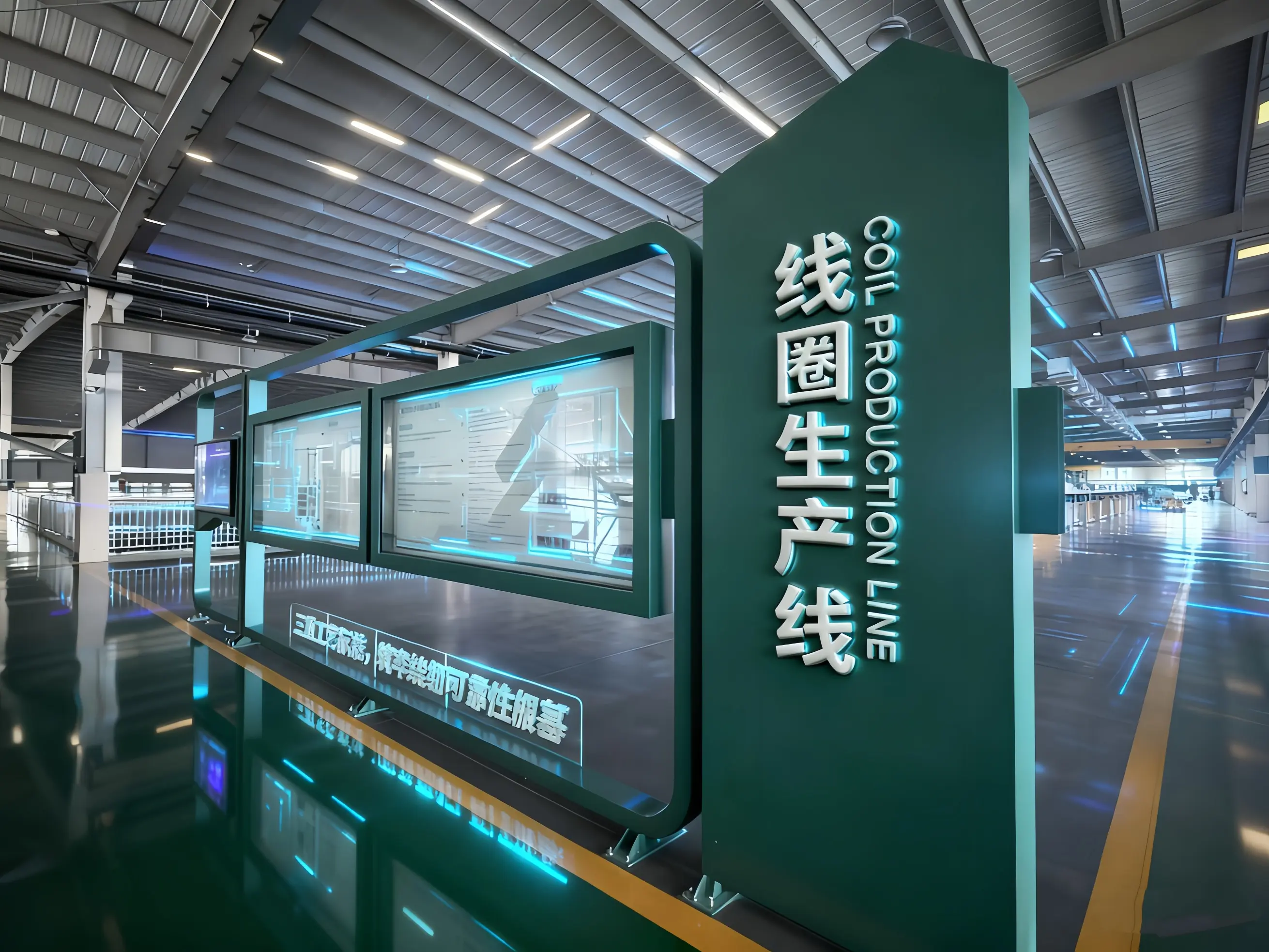
Wuxi Shuhong Machinery Technology Co., Ltd. is a premier global manufacturer specializing in high-performance electrical machinery and aluminum-plastic composite panel production systems. Our comprehensive electrical production line includes state-of-the-art silicon steel core processing lines, amorphous alloy core shearing systems, dry-type and oil-immersed winding equipment, specialized corrugated tank production lines, and high-tolerance molds.
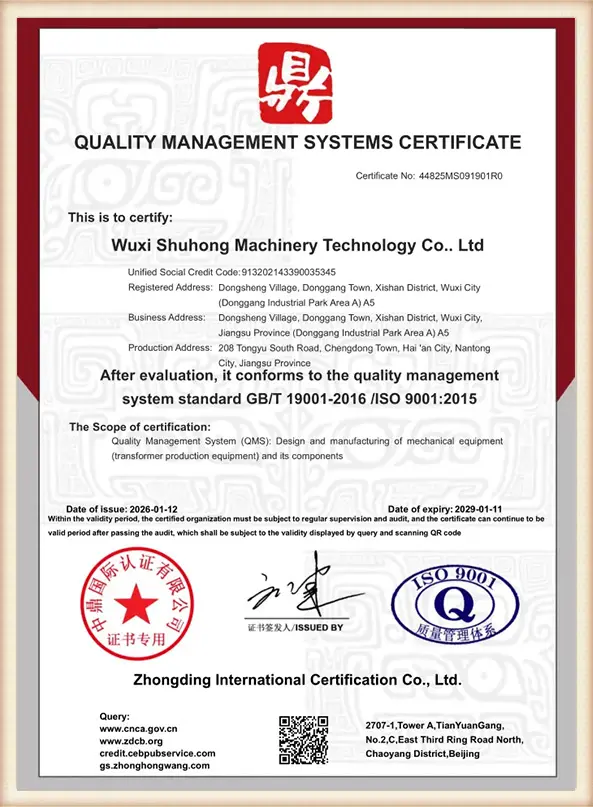
Operating from our modern manufacturing campus, we integrate R&D, engineering design, precision CNC manufacturing, and complete post-sales support to deliver turnkey systems that satisfy rigorous international quality standards.
Learn More About Us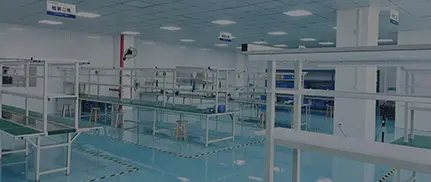

Take an inside look at our advanced CNC fabrication workshops, robotic welding cells, quality inspection laboratories, and final assembly lines. See how we guarantee reliability at every stage of the manufacturing process.
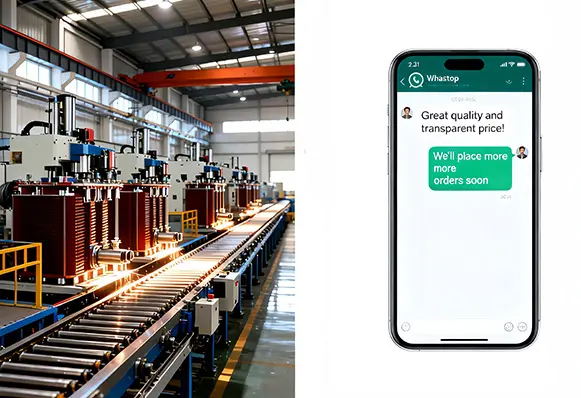

Clear, transparent pricing models with zero hidden markups. We provide comprehensive line-item pricing directly from our manufacturing facility.
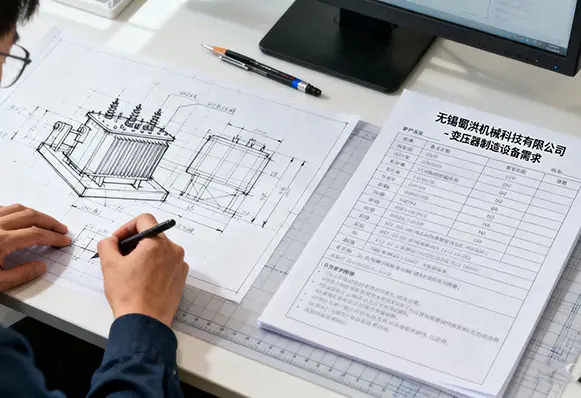

Our engineering team designs custom equipment parameters, layout prints, and automation sequences tailored to your factory's specific volume goals.
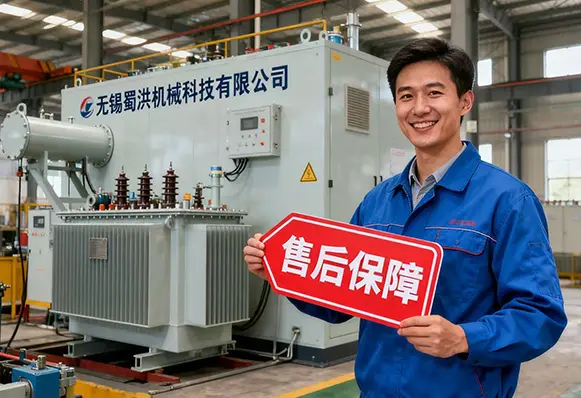

On-site installation, operational training, routine maintenance plans, and immediate access to original factory spare parts.


24/7 technical helpdesk support. Our team responds to service requests within 2 hours, minimizing unplanned downtime at your facility.

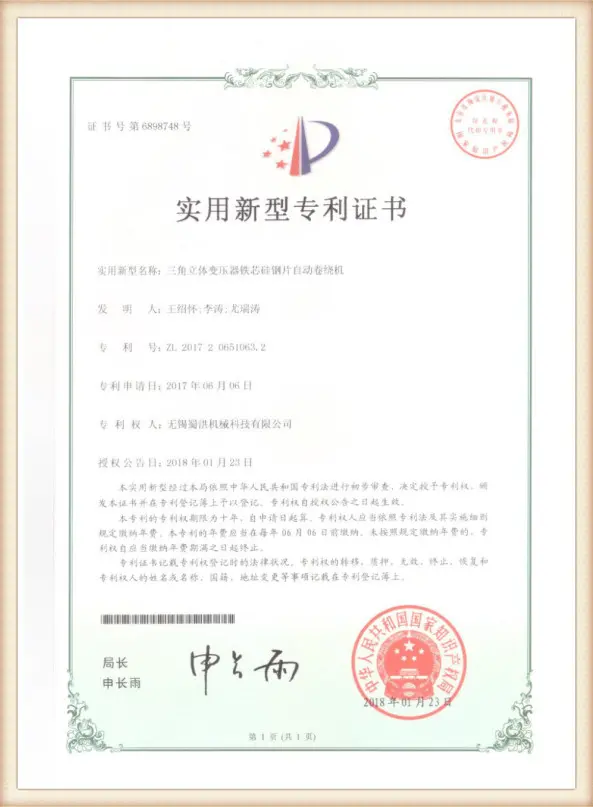
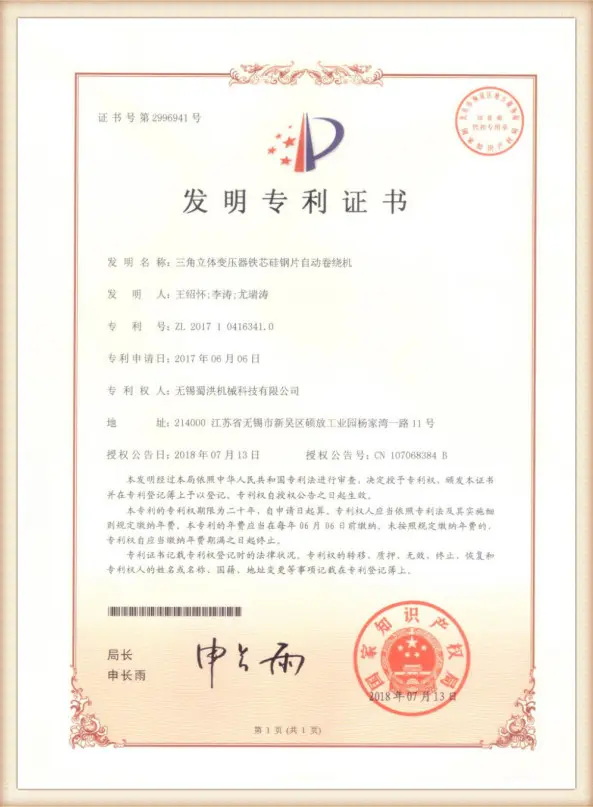
As the industrial world transitions to Industry 4.0, transformer and coil factories are shifting from manual setups to fully automated production networks. Our future roadmap prioritizes integration with factory Manufacturing Execution Systems (MES) and centralized SCADA platforms. This layout provides factory managers with real-time feedback on feed rates, cycle times, slitting tolerances, and power consumption metrics.
Furthermore, our next-generation foil winding machines utilize closed-loop, laser-monitored tension systems. These modules make micro-adjustments to the pay-off stand dynamic brakes in real-time, maintaining tension stability during fast speed variations and eliminating mechanical stress concentrations.
By implementing these technologies, factories can establish predictive maintenance routines, reduce scrap rates, and ensure consistent product quality across multiple manufacturing sites.

Learn how our magnetic brake control loops dynamically adjust tension parameters to eliminate wire deviation on high-voltage horizontal winders.

From collaborating with global coil manufacturers, we analyze how high-precision guidance nozzles prevent jumping issues during rapid transitions.

How modern coil and motor manufacturers utilize MES and SCADA protocols to enable remote machine monitoring and quality tracking.

Practical ways transformer manufacturers handle diverse product specifications without suffering long tooling switchover times.
During mechanical slitting, shearing pressure can generate physical strain at the cut edges, damaging the orientation of the grain domains and increasing localized core loss. Our machines use premium alloy steel blades, automated clearance controls, and precise tension regulation to keep burr heights under 0.02 mm. Following cutting, vacuum annealing furnaces restore the material's magnetic structure.
Traditional stacked cores require step-lap joint laminations, creating air gaps that increase reluctance, noise, and core losses. 3D Triangular Rolled Cores utilize continuous wound ribbons. This configuration eliminates joints, yields a symmetrical three-phase path, reduces weight, and lowers no-load loss by 20-30% while reducing sound levels.
Our foil and wire winding systems combine variable frequency AC motors with pneumatic tension controls. Closed-loop sensors track wire tension in real-time, instantly adjusting feed speed to avoid tension spikes. This design prevents jumping, minimizes coil resistance variations, and ensures high structural integrity.
We provide custom engineering for corrugated sheet forming and automatic fin welding machines. Based on your design plans (including plate depth, pitch spacing, and material thickness), our engineers customize PLC programs and mechanical assemblies to integrate into your production environment.
Get in touch with our engineering team today to receive a comprehensive, transparent quote or to discuss your custom manufacturing requirements.
Inquiry Now